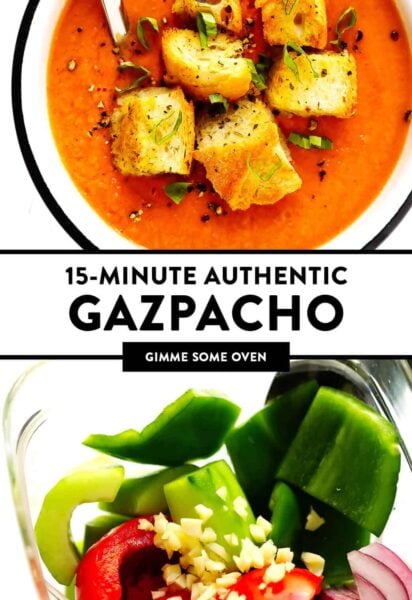
Everything I’ve learned living in Spain about how to make the best authentic, delicious, fresh tomato gazpacho recipe — in just 15 minutes!
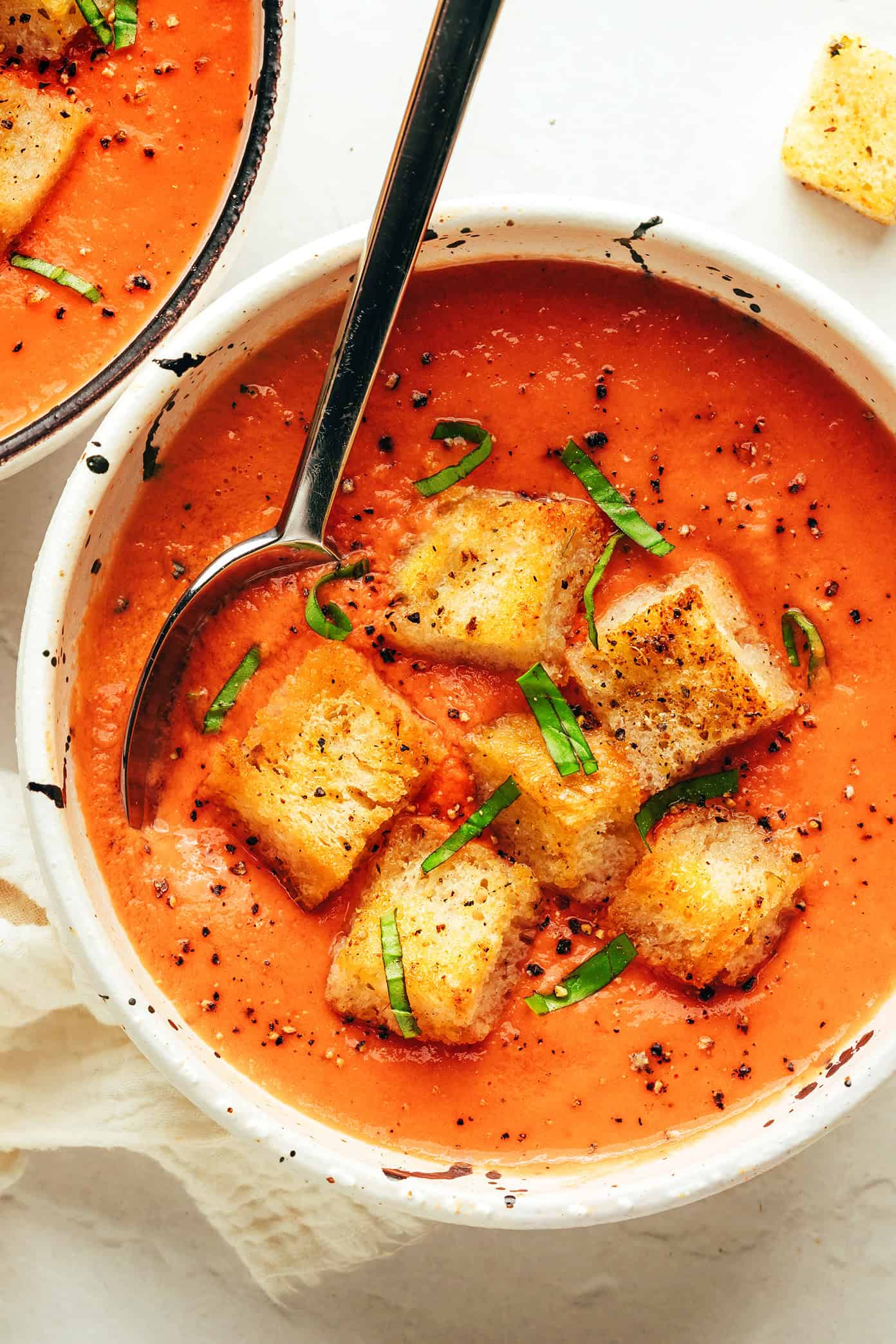
Fresh tomato season has finally returned again, which means that it’s time to start making allllll the gazpacho. ♡
I’ve been a fan of this refreshing, chilled, Spanish tomato soup for years. But ever since we moved to Barcelona, we have become next-level obsessed with it in the summertime, especially after having had the chance to spend time in Andalucía, the region where gazpacho originated. Down in that part of the country, gazpacho is available just about everywhere you turn — from restaurants, to bars, to coffee shops, to every little supermercado that you pass by. Even here in Barcelona, our nearest grocery store offers no less than seven different types of grab-and-go bottled gazpacho! It’s everyone’s favorite light and refreshing meal here to beat the summertime heat. And when made with the season’s best ripe produce — oh boy — there’s nothing better.
That said, if you have the chance to visit Spain, you will find that gazpacho here varies slightly from region to region. And of course, there are a million non-traditional ingredients and twists that modern cooks love to try too. But that said, Andaluz-style tomato gazpacho is probably the version that comes to mind when most people think of this blended soup. So if you happen to be craving a bowl (or a glass with a straw, see below!), here is my go-to gazpacho recipe that I absolutely love. It’s quick and easy to make in just 15 minutes or so, and I consider it lo mejor — just the best!
The BEST Gazpacho Recipe | 1-Minute Video
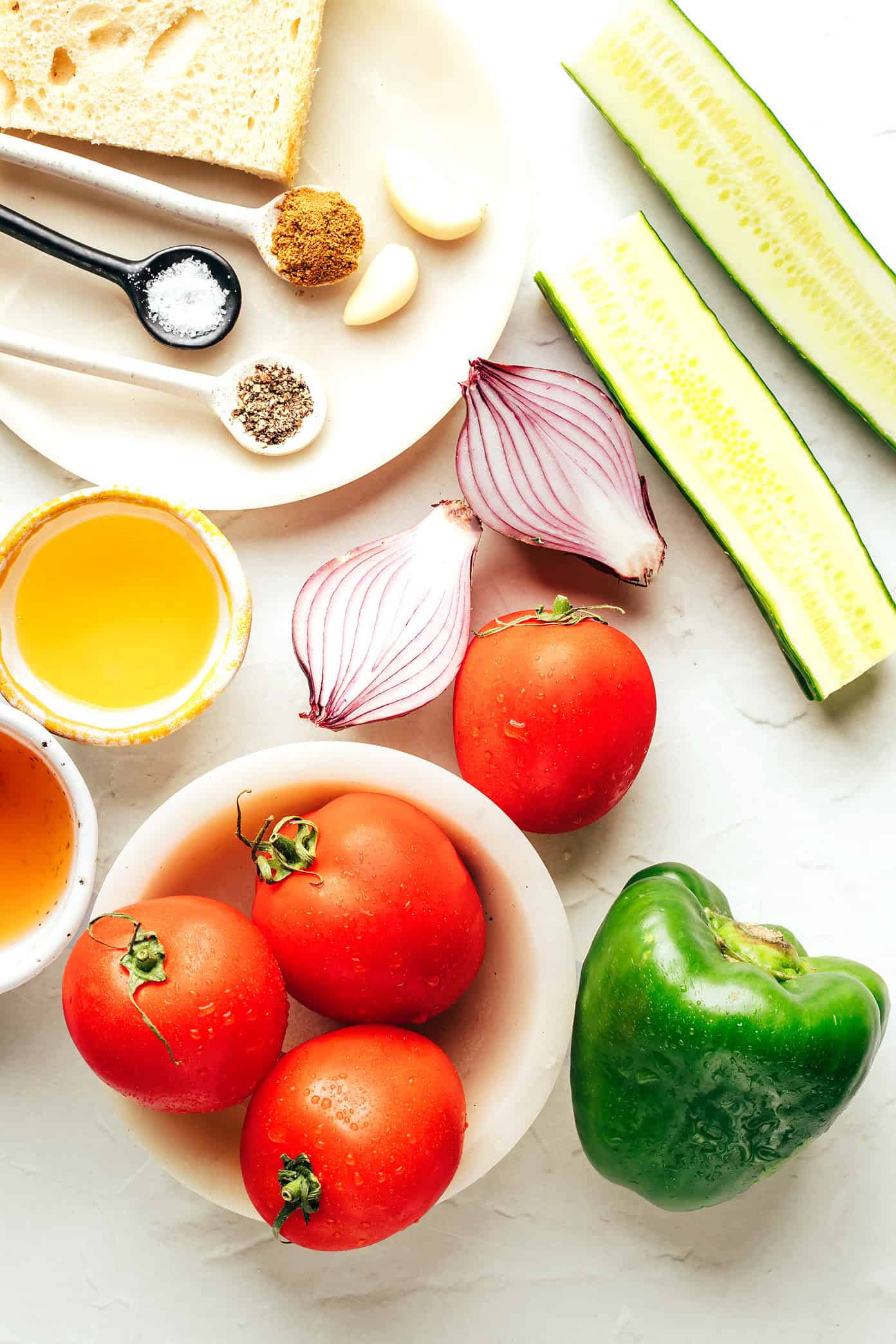
Spanish Gazpacho Ingredients
Gazpacho is the quintessential summer soup because all of the fresh ingredients are deliciously in season this time of year, and there’s no need to heat up your stove or oven! Just prep your ingredients on a cutting board. Then your blender or food processor will take it from there. To make this homemade gazpacho recipe, you will need:
- Tomatoes: Roma tomatoes or what we call “branch tomatoes” here in Spain (medium, round, soft-skinned tomatoes on the vine) are standard for traditional gazpacho. But really, any ripe, juicy, fresh tomatoes will do. There is no need to peel your tomatoes for gazpacho, but I do recommend coring them (scoop out the white flesh and seeds).
- Cucumber: 6-inch Persian or Kirby cucumbers are most often used in Spain, peeled and seeded. But I usually just toss in half of an English cucumber instead. Whichever works for you!
- Green bell pepper: Some of my Spanish friends are firm believers that green bell peppers, specifically, are a must for authentic Spanish gazpacho. But I’d say that any color of bell pepper you have on hand will do. :)
- Bread: Leftover white bread is the key to the texture of authentic gazpacho, helping to thicken it slightly and round out the flavors. Our friends here taught us to discard the crusts for optimal texture. Then to help the bread blend well, you can either:
- blend up the gazpacho, then poke the slice of bread into the center of the soup and let it sit there for 10 minutes to soften before blending it into the soup, or…
- just run it under the faucet and soak completely with water, ring it out completely with your hands, then add the bread to the soup ingredients and puree
- Red onion: Just half of a small red onion, peeled.
- Garlic: I use two small garlic cloves, or one large clove.
- Olive oil: Many traditional gazpacho recipes are loaded with lots of olive oil. But nowadays in Spain, they often cut down the amount of oil to make the soup a bit healthier. This recipe just uses 3 tablespoons.
- Sherry vinegar: Andalucía is known for its sherry. And of course, it’s sherry vinegar (vinagre de Jerez), which is always used to make gazpacho here in Spain. That said, though, if you can’t find sherry vinegar at your grocery store, you can sub in some red wine vinegar.
- Ground cumin: One of our friends in Andalucía taught me the secret of adding cumin to your gazpacho, which is actually a popular ingredient in the south of Spain due to the region’s proximity to Morocco. I love the subtle, earthy note that it adds to this recipe.
- Sea salt and black pepper: Essentials!
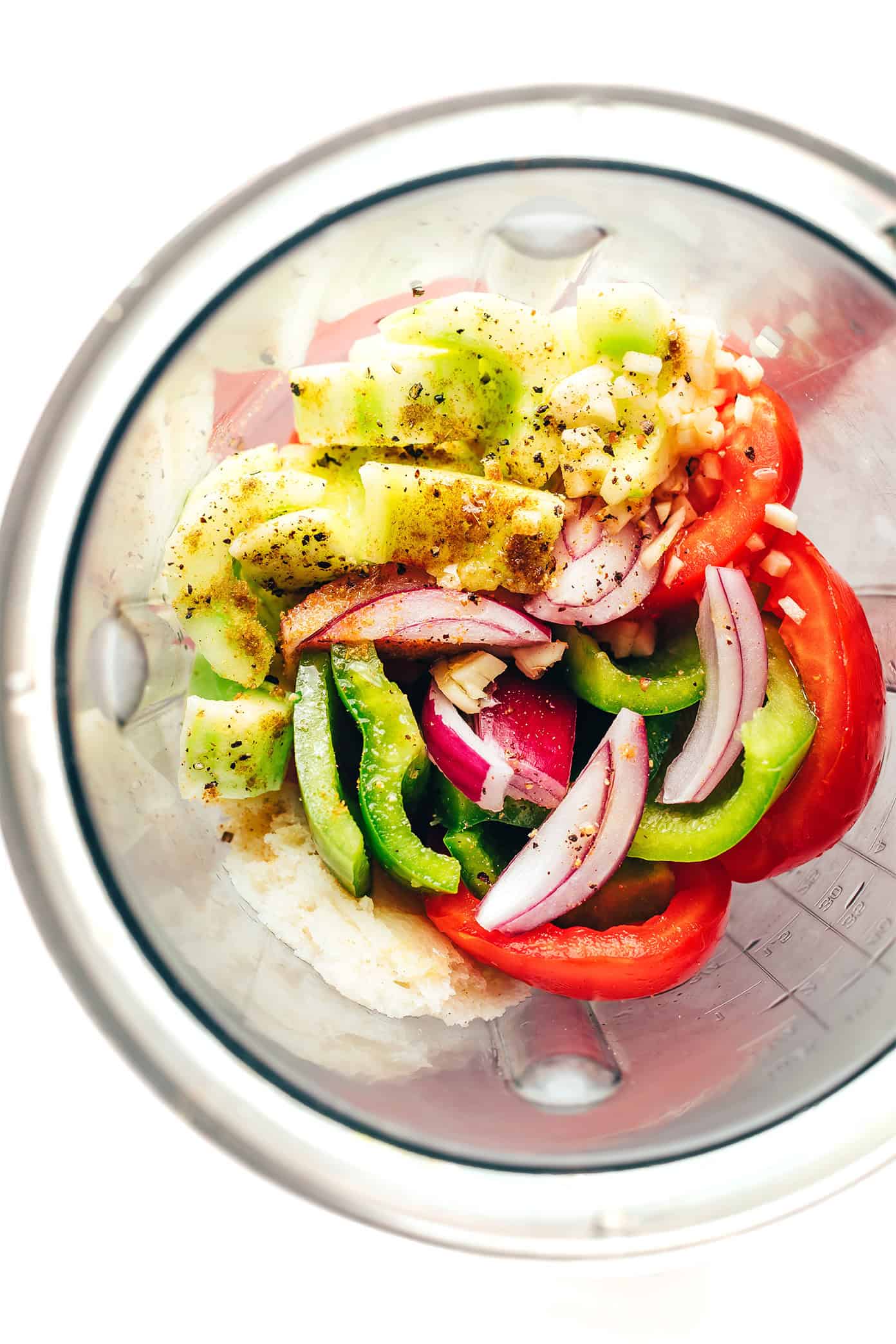
How To Make Gazpacho
To make homemade gazpacho soup, simply:
- Puree the soup: Combine all of your gazpacho ingredients in a blender or food processor, and puree for 1 minute or until the gazpacho reaches your desired consistency. (I love mine super-smooth.)
- Chill: Transfer the soup to a sealed container and refrigerate for 4 hours or until completely chilled.
- Serve: Then serve the soup nice and cold, garnished with your favorite toppings.
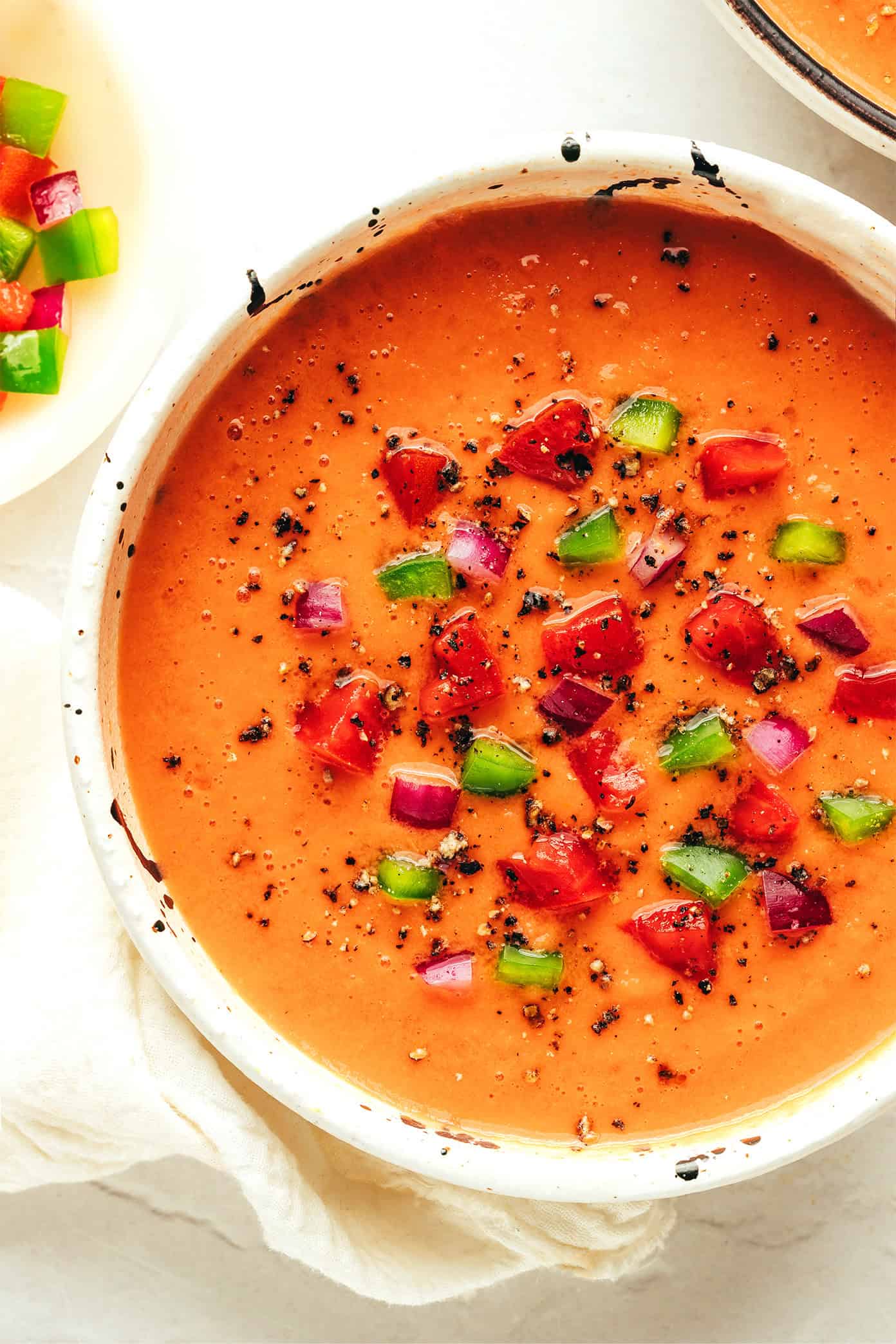
Gazpacho Soup Toppings
With such a simple pureed soup, toppings are a must in my book! I like to add any combination of the following to gazpacho:
- Homemade croutons: Easy to make with any leftover bread that you happen to have on hand.
- Fresh herbs: Basil, thyme, oregano, rosemary and/or chives are some of our faves.
- Fresh-cracked black pepper: Always a must, in my book.
- Olive oil: An extra drizzle on top is traditional in Spain.
- Cream: A drizzle of cream (or sour cream) can be nice, if you would like a creamier soup.
- Spanish ham and chopped hard-boiled eggs: These toppings are traditional with salmorejo, but they are also popular with gazpacho in the south of Spain.
Or, of course, it’s probably most common to just sprinkle a few of the leftover chopped gazpacho veggies on top (such as tomato, green pepper, onion or cucumber). Whatever sounds good to you!
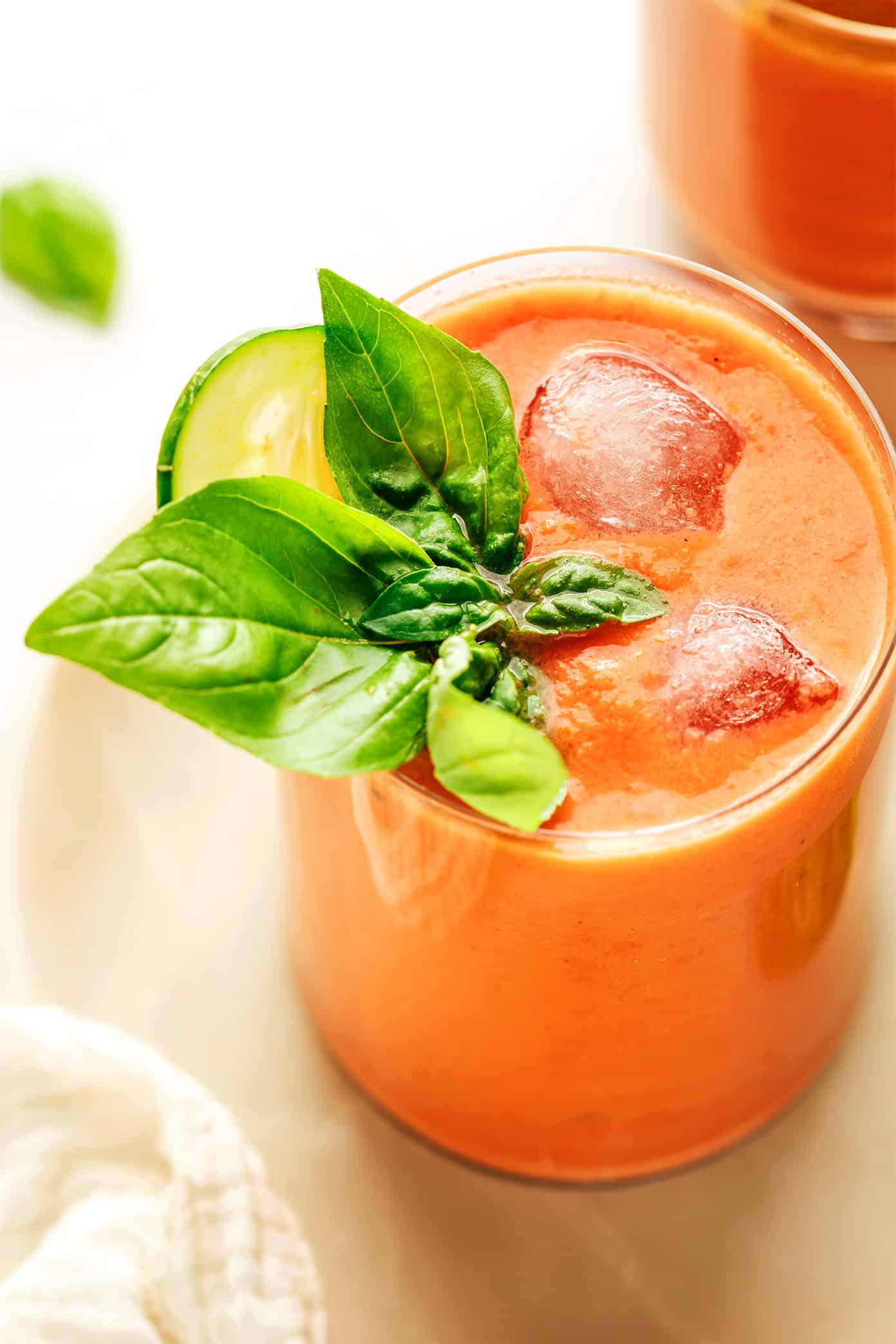
How To Serve Gazpacho
You can either serve gazpacho soup in a bowl or mug, garnished with your desired toppings. Or to keep things super simple, many places in Spain just serve gazpacho over ice in glasses with a straw, which I really love! (See photos below.)
The one thing to note when serving gazpacho is that it needs to be thoroughly chilled. So plan to blend up the recipe a few hours before serving, so that it has ample time to cool off in the fridge before your meal.

Gazpacho Variations
While the recipe below is for authentic tomato gazpacho, there are of course zillions of ways that you could customize your gazpacho. You could:
- Add fruit: Watermelon, cantaloupe, and strawberries are the common additions to red gazpacho here in Spain. (Here is my recipe for watermelon gazpacho.)
- Add veggies: Beets, zucchini and corn are also popular additions.
- Add extra herbs: Feel free to also add in any fresh herbs that sound good, such as basil, rosemary, thyme, or chives.
- Add spice: This is definitely not a common addition to gazpacho in Spain, since the country almost always avoids heat in its food. But I sometimes love adding in a few slices of jalapeño or serrano to this recipe to give it an extra kick.
Authentic Gazpacho

Ingredients
- 2 pounds ripe Roma tomatoes, halved and cored*
- 1 small (1/2 lb) cucumber, peeled and seeded*
- 1 medium green bell pepper, cored
- 1/2 small red onion, peeled
- 2 small garlic cloves (or 1 large clove), peeled
- 3 tablespoons olive oil
- 2 tablespoons sherry vinegar
- 1 teaspoon fine sea salt
- 1/2 teaspoon freshly-cracked black pepper
- 1/2 teaspoon ground cumin
- 1 thick slice of white bread, soaked, crusts removed*
- optional garnishes: homemade croutons, chopped fresh herbs, a drizzle of olive oil, or any leftover chopped gazpacho ingredients
Instructions
- Purée. Combine all ingredients together in a blender or food processor. Puree for 1 minute, or until the soup reaches your desired consistency.
- Season. Taste and season with extra salt, pepper and/or cumin if needed.
- Chill. Refrigerate in a sealed container for 3 to 4 hours, or until completely chilled.
- Serve. Serve cold, topped with your desired garnishes.
Notes
 Did you make this?Let me know how it turned out in the comments below!
I got a bunch of home-grown tomatoes from my family and was wondering how to use them up in a way that follows my current liquid/soft diet (I’m recovering from jaw surgery). Entered this recipe and all is well. This is my first time making gazpacho. Thanks to this recipe, everything came out perfect. I tried not to eat it all before putting it in the fridge to chill. All the combined tastes awakened my taste buds. I couldn’t be happier.
This is an excellent recipe. This will replace my old recipe from a favorite Spanish cookbook acquired many years ago. This recipe has a nice balance of flavors. I may add a touch of spice after it sits for a while but that is just our personal quirk.
This was so simple and so flavorful ♥️ it truly reminded me of our time in Spain♥️!!
My husband loved this, his first time liking gazpacho! I didn’t peel or seed anything, and served it coarsely pureed. Fiber is good for us! Powdered cumin and dried basil are good additions, as is balsamic vinegar for the sherry vinegar. I didn’t use salt (as I must restrict it)!but instead served shredded Mozzarella or Parmesan for garnish. This recipe will be my go-to for summertime abundance from the garden!
My first time tasting Gazpacho soup . This recipie tantalized my taste buds!! I’ve saved it and shared it with family and friends . Thanks for sharing your recipe!!! 😊
Good recipe! I stayed pretty close to what is written but I did have a leftover beefsteak tomato that I seeded and threw in along with using lime juice instead of the vinegar. Tastes good and will get better as it chills.
Nice recipe. Mine is similar. I like spice, so I add a tiny bit of chili powder & a jalapeño but I don’t use bread. Local taste is also for some cilantro, which plays well with the cumin. Instead of red wine vinegar, I use white balsamic. “Let a hundred flowers bloom.”
I made this today and because my garden tomatoes weren’t ready yet, I used Roma tomatoes I had frozen last summer instead. It was delicious and will make it again when the tomatoes are fresh from the garden. I sprinkled fresh basil on it to serve and will try it next with garlic croutons. I used English cucumber and didn’t peel it,
Love it!!!
I can’t imagine substituting red wine vinegar for sherry vinegar. I was able to find El Majuelo brand (which is what I bought in Barcelona) and Saputo’s Market & Deli, online. It’s less expensive here than it was in Barcelona. I would love to make this gazpacho, but I would have to find a textural substitute for the bread, because we don’t keep bread in the house. I’m wondering if a little almond flour would work?