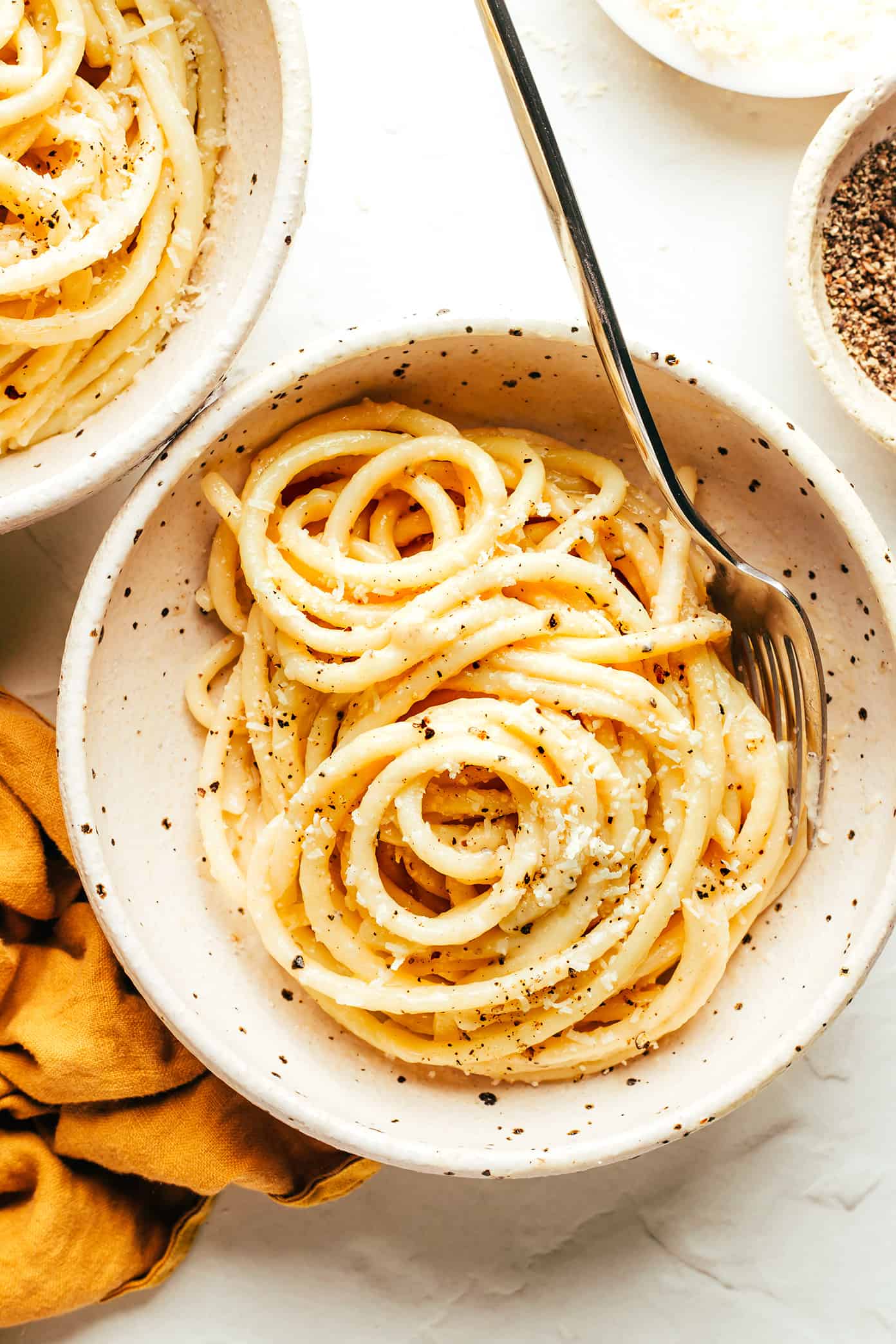
My favorite cacio e pepe recipe is easy to make in about 30 minutes with just 4 simple ingredients.
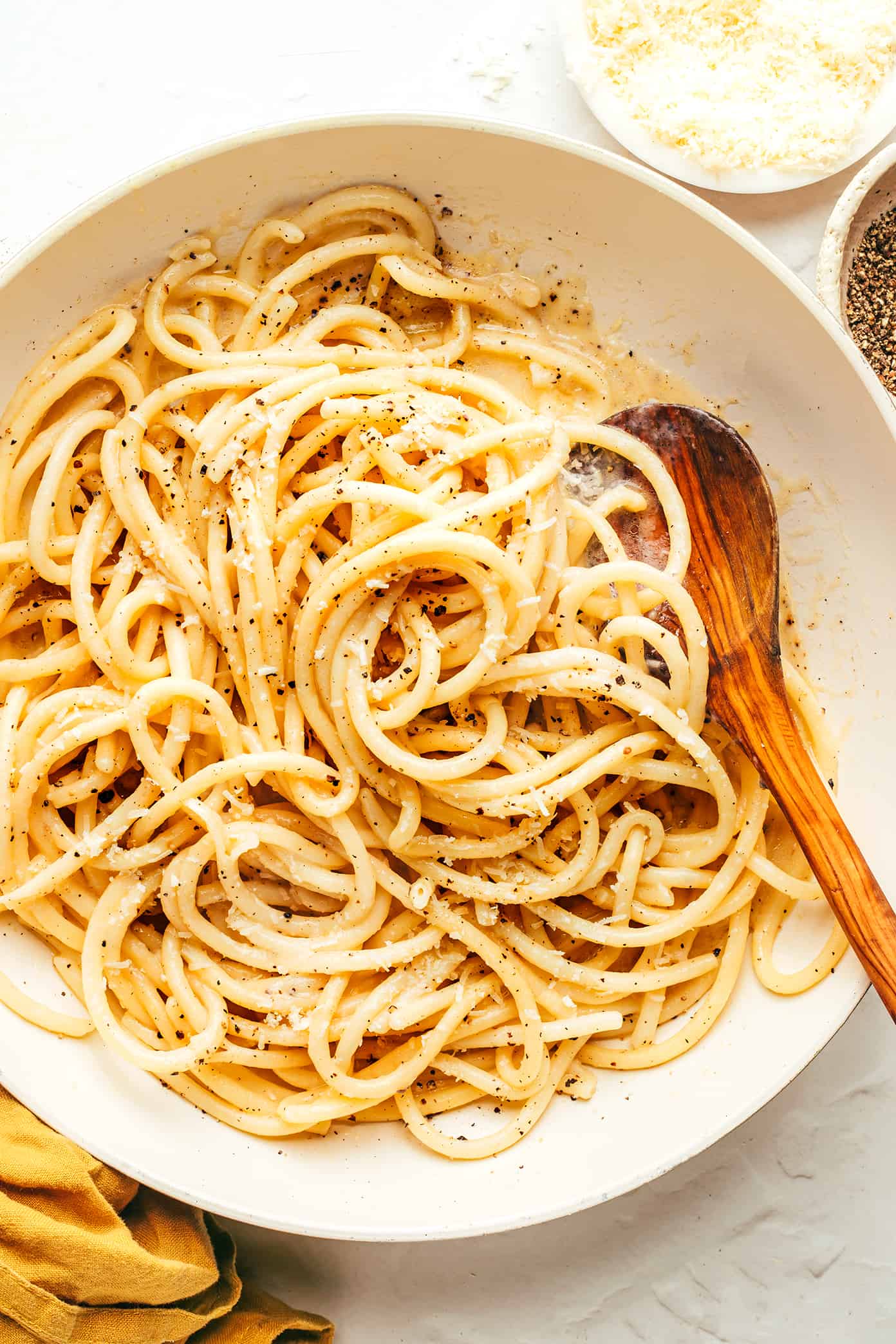
Anthony Bourdain once said that cacio e pepe “could be the greatest thing in the history of the world.”
And I have to say, I wholeheartedly agree. ♡
This classic Roman pasta easily ranks up there as one of our family’s all-time favorite comfort foods. We cook up a batch of cacio e pepe at least once or twice a month, often turning to it in a pinch because we make it a point to keep the three main ingredients — “cacio” (cheese), “pepe” (black pepper), and pasta (we usually opt for bucatini) — always stocked in our kitchen. Barclay’s usually in charge of grating up a big pile of cheese while I make a big green salad or some roasted veggies to go on the side. Then once the pasta is ready to go and tossed with that irresistibly glossy cheese and pepper sauce, we always waste zero time dishing it up and grabbing a fork and diving in. There’s nothing better than a steaming hot bowl of cacio e pepe!
That said, as simple as the cacio e pepe ingredient list may be, this dish is famously finicky when it comes to technique. If the cheese is overheated or the starchy pasta water isn’t emulsified properly, the sauce can turn into a sticky, clumpy mess, which I can vouch from experience is always such a tragedy. So this week, while we are revisiting the four classic Roman pasta recipes, I went in and updated this post with all of the best tips for cacio e pepe success that I’ve learned over the years. We also added in a new video below that will hopefully provide some visuals to help clarify each step of the process. And we also now have a pronunciation guide, so that all of us non-Italians can give the name of the dish the proper respect it deserves.
I do want to note that I prefer to add a bit of butter to my cacio e pepe, which I’m well aware is not authentically included in traditional cacio e pepe, and makes this more similar to Roman-style Alfredo. However, after having made and ordered this dish dozens and dozens of times both with and without butter, I’ve decided that I just really love the extra hint of flavor that it adds. You’re welcome to include butter or leave it out, so I’ve included instructions for both options below.
Alright, let’s make some cacio e pepe together!
Cacio e Pepe Recipe | 1-Minute Video
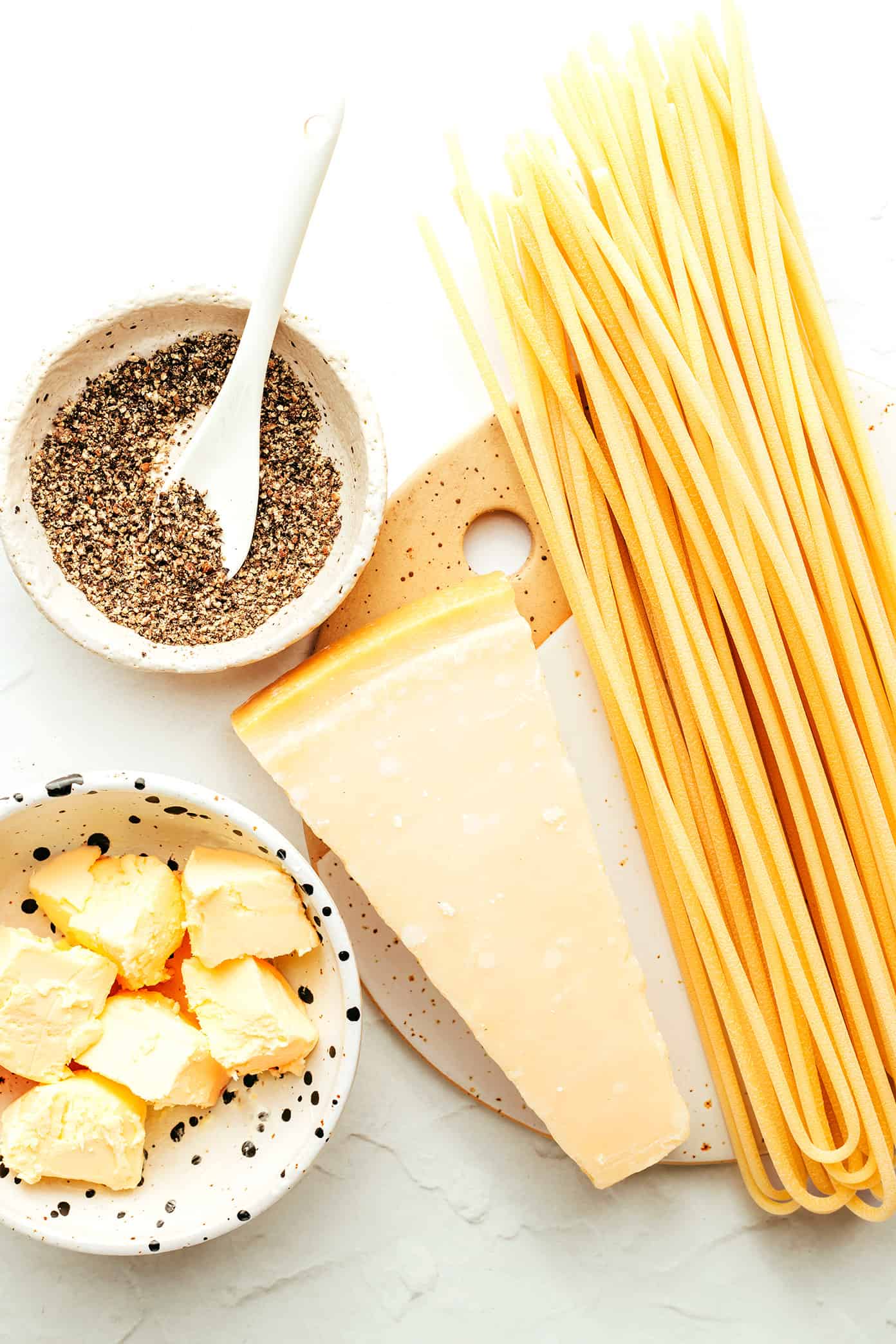
Cacio e Pepe Ingredients
Here are a few notes about the cacio e pepe ingredients that you will need for this recipe:
- Pasta: Thick spaghetti, bucatini, or tonnarelli are the three pasta shapes most often traditionally used when making cacio e pepe, but this recipe will work with just about any pasta shape you happen to have on hand. I recommend using bronze-cut pasta, if possible, since the rougher edges will help the cacio e pepe sauce better adhere to the pasta.
- Pecorino Romano: This aged sheep’s cheese is always traditionally used in the Roman pastas, and its salty, grassy, earthy flavor is absolutely delicious in cacio e pepe. That said, during one of my cooking classes in Rome, my professor swore by using a 50/50 blend of Pecorino and Parmigiano (Parmesan), which I’ve also tried and agree is delicious.
- Butter: Yes!! I know this is a controversial and certainly a non-traditional ingredient in cacio e pepe, which is typically made with only cheese and pepper. But as mentioned above, I’ve made this dish dozens of times both ways and have decided I simply prefer it with a bit of butter. You’re completely welcome to omit the butter though and just add some more starchy pasta water in its place.
- Black pepper: It’s very important to freshly ground the black pepper to give this recipe optimum flavor, so grab your pepper mill instead of the pre-ground black pepper you can buy at the store. I definitely prefer my cacio e pepe heavy on the “pepe” (black pepper), but know that many people are sensitive to black pepper, so please feel free to use however much you prefer to taste. Also please note that the recipe calls for coarsely-ground black pepper. If you only have finely-ground black pepper on hand, you will need to use less.
Cacio e Pepe Tips & Troubleshooting
Before we get to the full cacio e pepe recipe below, here are a few tips to keep in mind when making this pasta:
- Read through the recipe first. This recipe is not difficult to make, but it does require a bit of multitasking that goes very quickly once you begin cooking the pasta. So I recommend taking a few minutes to read the entire recipe fully before you begin cooking.
- Finely-grate the cheese by hand. As always, it’s important to grate the cheese by hand versus buying pre-grated cheese at the store (which usually contains anti-caking agents that prevent the cheese from melting smoothly). I recommend using a microplane or your preferred grater to finely grate the cheese just before adding it to the recipe.
- Be sure to use a large enough sauté pan. You are going to need ample room to toss the pasta when combining it with the sauce, so it’s important to use a large pan or stockpot that has plenty of space.
- Have a strainer or tongs ready to go. I find it’s much easier to use a spider strainer (or tongs, if using long noodles) to transfer the pasta directly from the stockpot to the sauté pan. But if you do not own either of those, you can use a heatproof cup to scoop out a few cups of the starchy water (it’s always good to reserve more than you need, just in case). Then you can drain the pasta in a colander and transfer it immediately to the sauté pan.
- Don’t use too much pasta water. We want the starches in the pasta water to be very concentrated for this recipe, which will later help to emulsify the cheese sauce and adhere it to the pasta. So I recommend filling your stockpot no more than half full (about 3 quarts).
- Don’t overcook the pasta. In Italy, it’s very important that the pasta is served al dente so that it still has a nice firm bite to it. Since the pasta will continue cooking slightly while it is tossed with the sauce, it’s important to keep a close eye on the pasta during the final few minutes of cooking so that you can transfer it over as *soon* as it just barely reaches al dente.
- Don’t overheat the sauce. If you’ve ever had the cheese clump up or stick to the pan when making cacio e pepe (very common, but always such a tragedy!), it was likely due to the cheese being overheated. Be absolutely sure that the burner is turned off below the sauté pan with the melted butter. (If you have an electric stove, it’s best to transfer the pan to a cool burner since the original will still retain heat.) And toss the pasta continuously after you add in the cheese so that it can be exposed to cooler air and not overheat while sitting still in the pan.
- Serve immediately. This pasta is definitely best served immediately hot out of the pan, so dish it up as soon as the sauce has emulsified and enjoy!
Cacio e Pepe FAQ
How do you pronounce “cacio e pepe?” The correct cacio e pepe pronunciation in Italian is: “KA-choh eh PEH-peh.”
What does “cacio e pepe” mean? It means “cheese and pepper,” referencing the Pecorino cheese and black pepper used to make the sauce.
Where did cacio e pepe originate? The exact origins and evolution of the dish are controversial among historians, as all of the Roman pastas tend to be. Some believe cacio e pepe “first appeared centuries ago among shepherds spending the spring and summer months in the grazing meadows of the Apennine Mountains, which traverse the Italian peninsula. While keeping watch over their flocks, shepherds would tap into personal stores of dried pasta and pepper; cheap, easy to transport and resistant to spoilage, these two ingredients were combined with the cheese (made from milk of the herders’ flocks) to make a delicious, simple dish that kept them warm on cold evenings.” That said, some modern historians believe the origins of cacio e pepe may have been less romantic, likely developing “in the mines and factories that once surrounded the Lazio region encompassing Rome, near where low-income families once lived.”¹
How do I prevent the cheese from clumping or sticking to the pan? This dish is famously finicky and prone to clumping if the cheese sauce does not properly emulsify. As mentioned above, always always finely grate the cheese by hand versus purchasing pre-grated cheese at the store. Be absolutely sure that the sauté pan with the butter has been removed from the heat (or a still-hot burner) before adding the pasta. Be sure to toss the pasta quickly and constantly once you begin adding the cheese. Then as soon as the cheese begins to emulsify and melt into a glossy, smooth, dreamy sauce, serve the pasta immediately. This pasta is always best served hot out of the pan.
The 4 Roman Pastas
Interested in trying out all four of the classic Roman pastas? These traditional recipes won’t let you down!
Cacio e Pepe
Equipment
Ingredients
- 8 ounces uncooked pasta (I recommend bucatini)
- 2 tablespoons butter, diced into 1-tablespoon chunks*
- 1 teaspoon freshly-ground coarse black pepper*
- 2 ounces finely-grated Pecorino-Romano cheese
Instructions
- Boil the pasta water. Fill a large stockpot about halfway full of water (roughly 3 quarts) and bring it to a rolling boil. Generously season the water with fine sea salt (about 2 tablespoons).
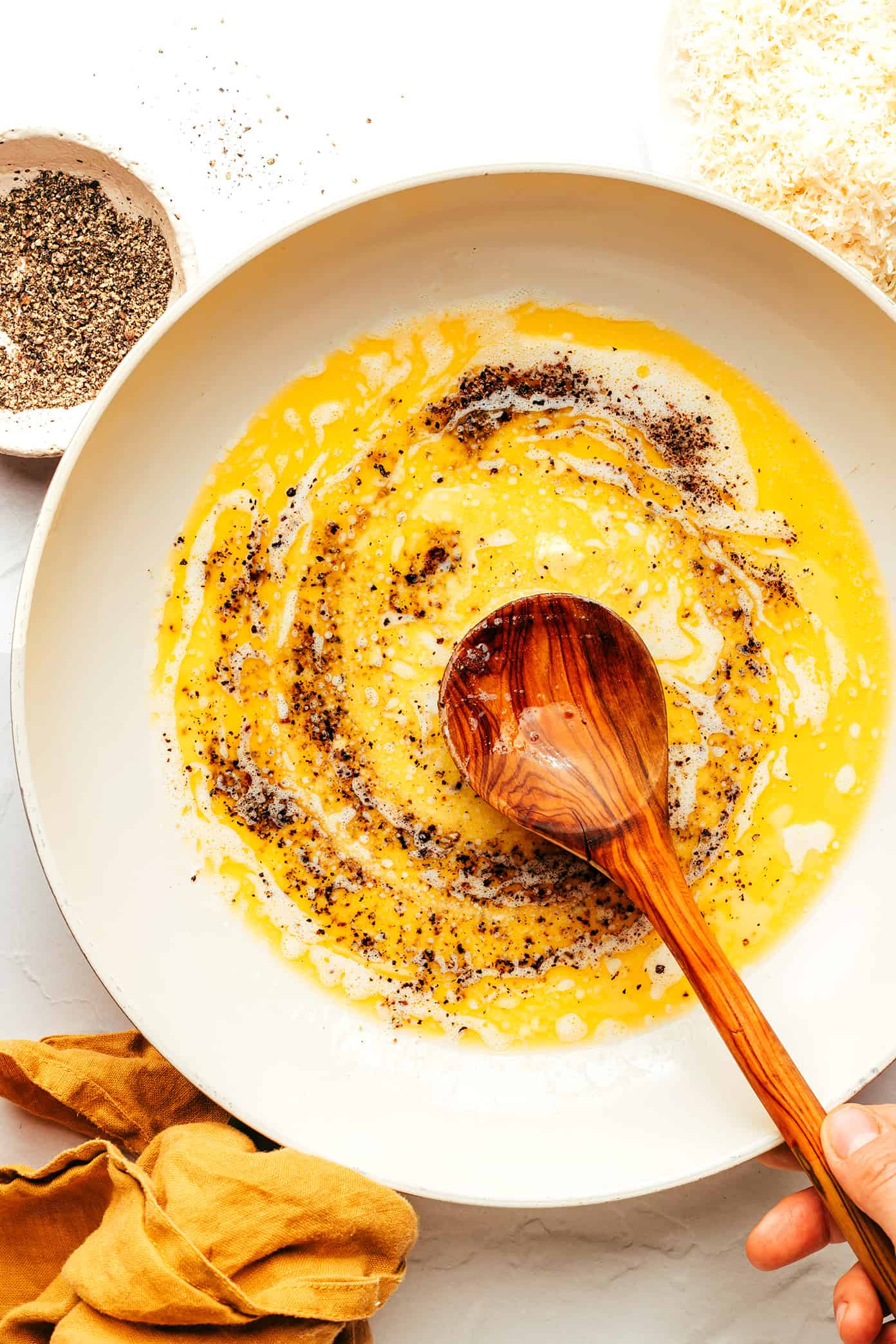
- Bloom the pepper. Meanwhile, as the pasta water heats, melt the butter in a large sauté pan (preferably nonstick) over medium heat. Add the pepper and let it cook for 30 seconds, then turn off the heat. If you have an electric stove, you'll want to remove the pan from the hot burner entirely.
- Cook the pasta. Add the pasta to the boiling water and cook, stirring occasionally, until it is just barely al dente.
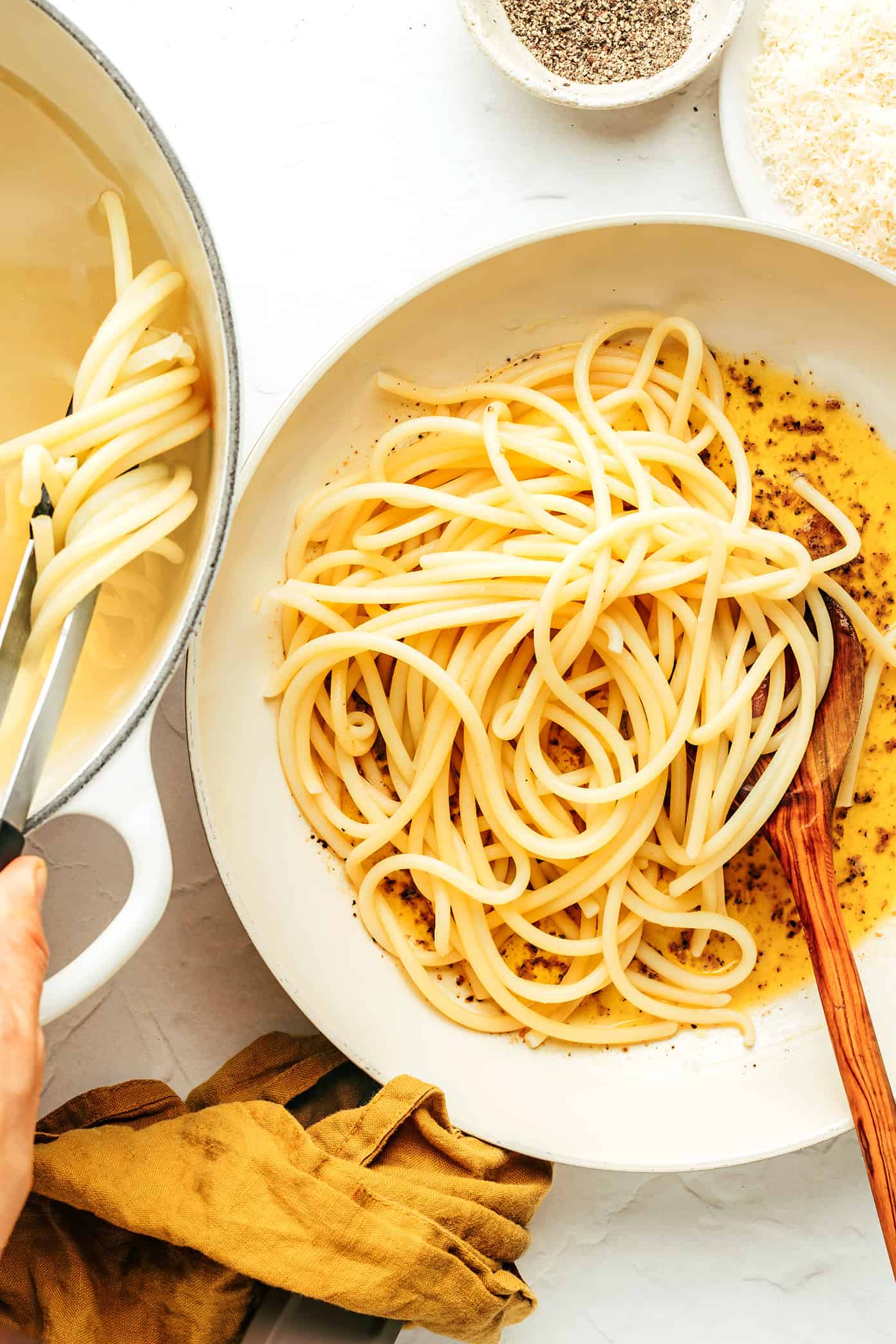
- Toss the pasta. Use tongs* to quickly transfer the pasta directly to the sauté pan with the melted butter and pepper. Add 1/3 cup of the starchy pasta water to the pan and toss the pasta briefly to combine. Add in half of the cheese and toss the pasta briefly to coat. Add in the remaining half of the cheese and continue tossing the pasta, adding in a few extra tablespoons of starchy pasta water if needed to thin out the sauce, until the cheese is melted and forms a smooth and glossy sauce.
- Serve. Serve the pasta immediately, garnished with an extra twist of black pepper and/or extra Pecorino if desired. This pasta is definitely best served hot out of the pan, so please enjoy it right away!
Notes
 Did you make this?Let me know how it turned out in the comments below!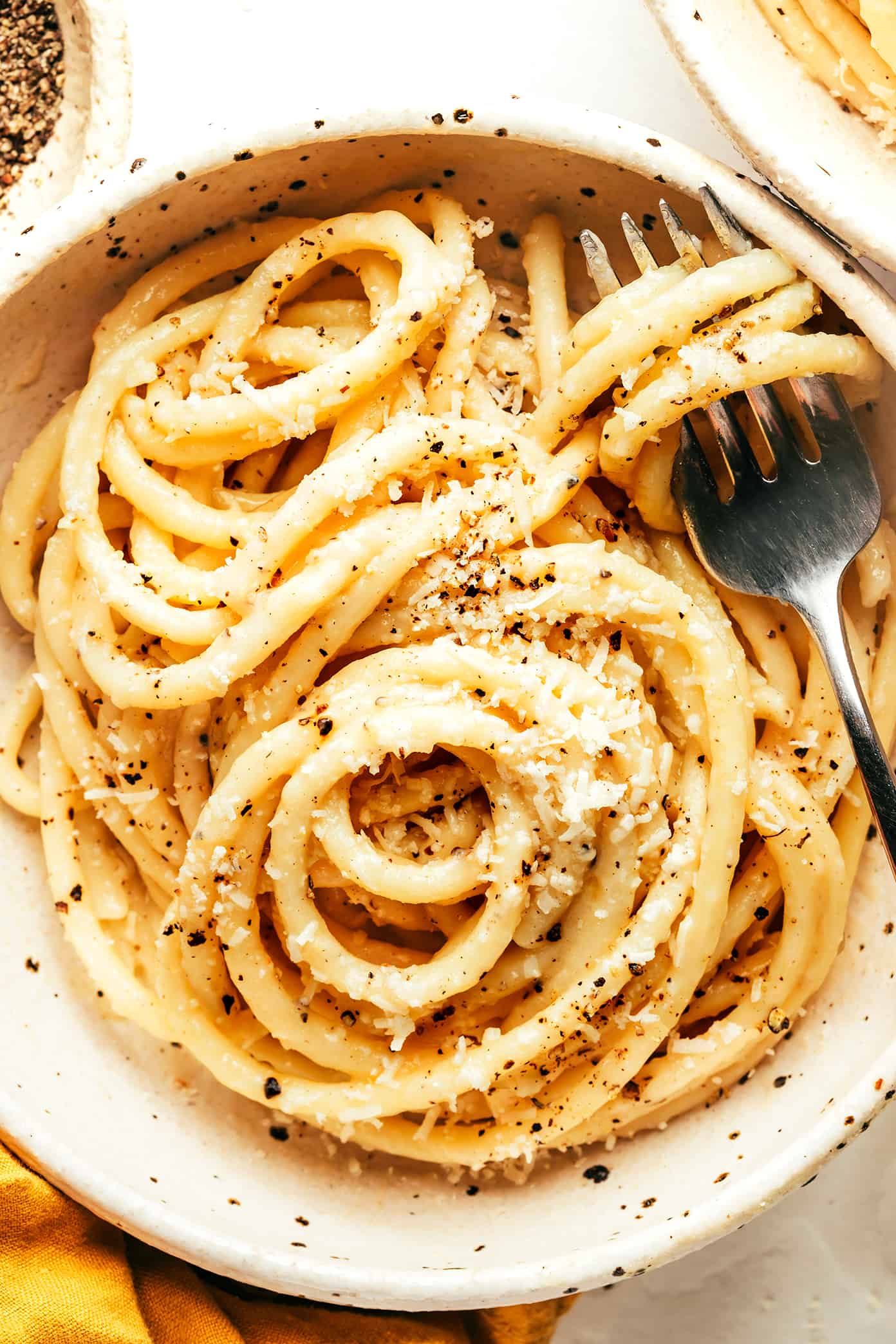

Your instructions are far more specific – and useful – than any other cacio e pepe recipe I’ve come across. I’ve tried it so many times, and it’s always a clumpy mess.
The key part you include and others don’t is the instruction to take the butter/garlic/water mixture off the stove and let it stand for three minutes — three minutes! — before stirring in the cheese.
Thank you!
I think this time it’s going to be fantastic.
Yum! Came out great. Added a bit of olive oil.
Finally found the perfect step-by-step recipe. This was super easy and so delicious! Allowing the sauce to cool and slowly adding the cheese while whisking was key. Creamy and smooth. This was a big hit!
As always, your recipes don’t disappoint.
Loved it, and followed instructions. Added red pepper flakes for some more heat. My cheese didn’t melt either , but it was just fine. Taste was delish.
I have made Chrissy Tiegen’s recipe for this for some time, but she uses bacon and husband and I are cutting out red meat (although I eat enough cheese to make up for the red meat ?). I think I might combine this recipe and Chrissy’s and come up w my own (ie use oil instead of butter to make it healthier, add garlic and red pepper but do everything else how this recipe says).
Thanks again for easy and delicious dinner recipes!
Hello!
This is absolutely delicious! My only question is with all the “cooling off” minutes, the end product was very luke warm and cold by the time we finish eating it.
Using a microplane for the cheese is one of the tricks to getting the sauce the way you want it, from experience. The really fine grate almost always ends in a perfect result.
I’ve made this quite a few times and in the beginning I always had a problem with my cheese clumping. I decided to put some of the pasta water and cheese in the blender and whipped it until it was creamy. I added it to the pan with the pepper and butter and more water if needed and it doesn’t clump.
Tried this tonight and my sauce turned out very creamy. At first it was clumpy after letting the butter and pepper rest for three minutes, so I put it back on the burner under low heat and continued to whisk until it smoothened out. Super quick and tasty!
Delicious and easy. Topped it w a poached egg and crumbled bacon. Very happy, thanks for the good recipe!
I didn’t drain the pasta and wait til it cooled, tong’d it right fr the pot into the sauce. Also to make sure the cheese melted and didn’t clump, I whisked it into the sauce over a very low heat, adding pasta water as needed.
Okay I LOVE this recipe and have shared it a few times with others as well. However after