Learn how to make hard-boiled eggs with this step-by-step video and easy recipe. It’s totally simple, and totally delicious!
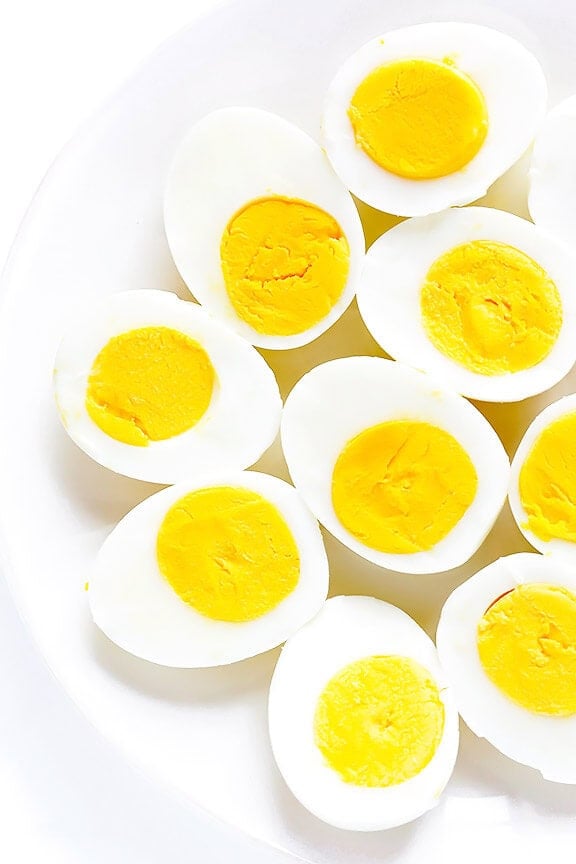
Anyone else always think of Ramona Quimby when you eat a hard-boiled egg?
Or maybe I should say, the not-hard-boiled egg? ?
Ha, I’m pretty sure that the fearless 8-year-old heroine of my childhood and her lunchroom escapades will always bring a smile to my face when I think of this method of cooking eggs. (And always give me a moment of pause before cracking open that shell, whoops.)
Well, whether hard-boiled eggs also happen to be your go-to pop of protein to pack in your lunchbox, or keep in the fridge for easy breakfasts, or pop on a cobb salad, or “devil” on Easter, or whatever sounds most egg-cellent to you — today I’m sharing my best tips and tricks (and a new video!) for how to hard-boil eggs perfectly every time. I actually first shared this hard-boiled egg recipe a few years ago, but it seemed like the perfect one to bring back for our weeklong series on how to cook eggs.
Let’s get to boiling!
How To Make Hard-Boiled Eggs | 1-Minute Video
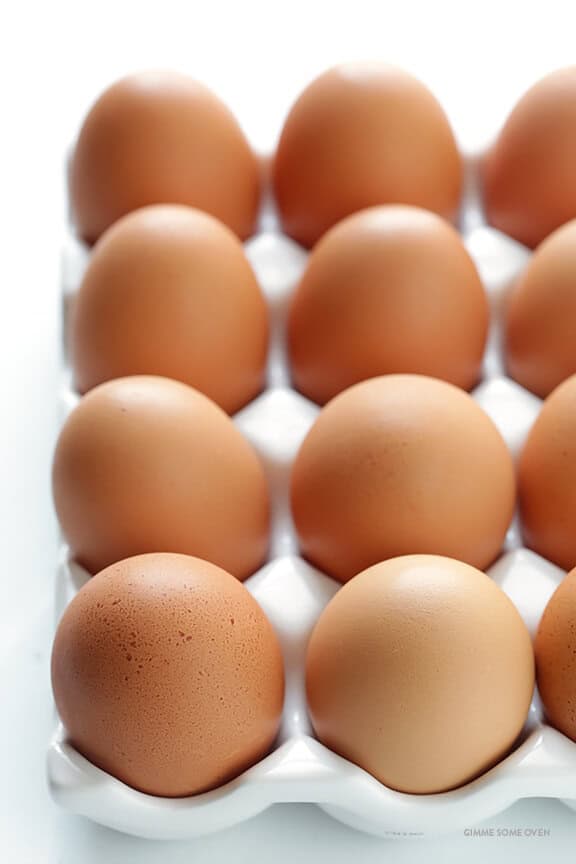
Choosing Your Eggs for Hard-Boiled Eggs
Similar to what we discussed in yesterday’s tutorial about how to make soft-boiled eggs, somewhat older eggs (versus fresh, brand-new eggs) are ideal for hard-boiling. They tend to peel easier, and crack less easily when boiling.
How To Hard-Boil Eggs
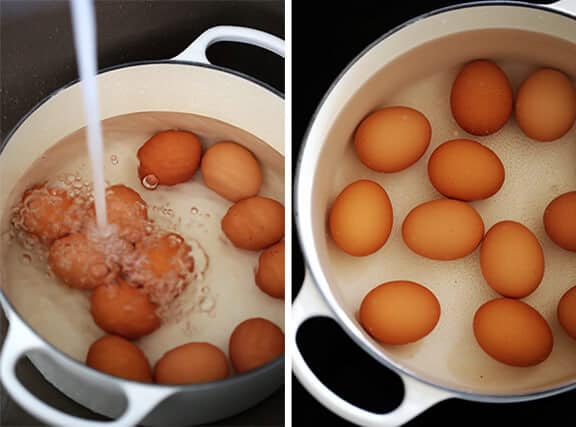
To make hard-boiled eggs, gently place your eggs in an empty saucepan or stockpot, and then fill the pan with cold water so that there is at least 1 inch of water on top of the eggs (if using 6 or less eggs), or 1.5-2 inches of water on top of the eggs (if using 7-14 eggs).
Transfer pan to the stove (uncovered) and heat over medium-high heat until the water reaches a rolling boil (we’re talkin’ big bubbles).
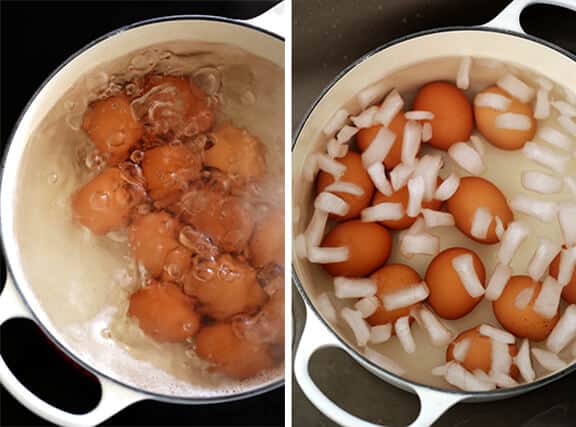
Transfer pan to the stove (uncovered) and heat over medium-high heat until the water reaches a rolling boil. Let the eggs boil for 1 minute (no more). Then remove the pan from the heat, and cover snugly with a lid. Let the eggs continue to cook in the pan for 9-11 minutes, or until the yolks reach your desired level of doneness.
(**This method of cooking the eggs in hot-but-not-boiling water reduces the chance of getting that weird greenish ring around the yolks. It’s harmless to eat, but it’s definitely a sign that your hard-boiled eggs have been over-cooked.)
Carefully drain out the hot water (or you can also transfer the eggs to a colander, and then return them to the pot). Then fill the pot with ice water, and let the eggs sit for a few minutes until they are completely chilled.
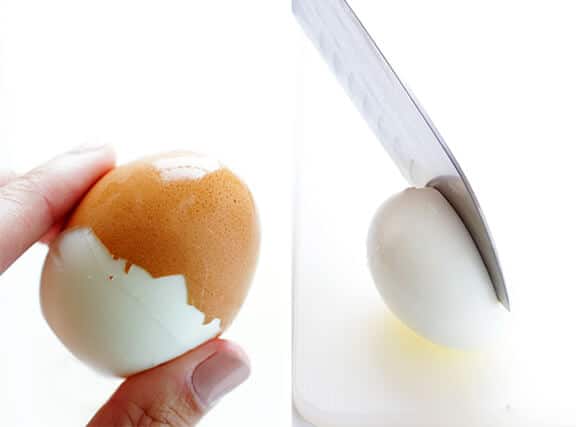
You can now either transfer them to a sealed container and refrigerate for up to 1 week. Or you can go ahead and peel them. To do so, I find it’s easiest to crack a big ring all around the center circumference of the egg by rolling it on the counter. But you can go with whatever works for you. Then slice and serve!
I’m a total purist, so my idea of the perfect hard-boiled eggs are served with just a pinch of salt and a generous crack of fresh black pepper. But go with whatever sounds egg-citing to you. ;)
Happy boiling!
This post contains affiliate links.
Hard-Boiled Eggs
Ingredients
- eggs (preferably 1+ week old)
Instructions
- Gently place your eggs in an empty saucepan or stockpot, and then fill the pan with cold water so that there is at least 1 inch of water on top of the eggs (if using 6 or less eggs), or 1.5-2 inches of water on top of the eggs (if using 7-14 eggs).
- Transfer pan to the stove (uncovered) and heat over medium-high heat until the water reaches a rolling boil. Let the eggs boil for 1 minute (no more). Then remove the pan from the heat, and cover snugly with a lid. Let the eggs continue to cook in the pan for 9-11* minutes, or until the yolks reach your desired level of doneness.
- Carefully drain out the hot water (or you can also transfer the eggs to a colander, and then return them to the pot). Then fill the pot with ice water, and let the eggs sit for a few minutes until they are completely chilled.
- Peel and serve the eggs immediately. Or transfer them to a sealed container and refrigerate for up to 1 week.
- *Granted, different pots/stoves may cause the eggs to cook more/less quickly, so test what cooking time will work best in your kitchen. I’ve found a good solid 10 minutes of cooking time works best for me.
 Did you make this?Let me know how it turned out in the comments below!

I can tell these are cooked to perfection! That yolk is absolutely gorgeous!
I did not know about the peeling trick. I always have trouble peeling my eggs so I’m going to try the trick out for sure.
Charmaine Ng
Really good looking eggs, Ali. And good looking pix, too. Your method is an interesting variant on one I used in Garde Mange just out of culinary school. The Chef was a screamer so we all learned quickly. Heh. I’m looking forward to field testing this recipe. Thanx for sharing!
Thank you George, we hope you like this method! :)
Cooking a perfectly boiled egg is sometimes tricky. It so interesting though that the age of eggs will also do a difference. Thank you for this very informative post! :)
You’re welcome, we’re glad you found it useful! :)
I don’t even like hard-boiled eggs, but I LOVE that you referenced Ramona Quimby.
Haha! Well we’re glad you enjoyed that! ;P
My daughters LOVE hard-boiled eggs and there’s really a science to making the perfect ones. I’m pinning this for future reference because I know I’ll be using it a lot!
Thanks Erin, we’re glad you liked this post! :)
I am obsessed with hard-boiled eggs lately. So many different ways to enjoy them—I like making a batch at the beginning of the week and using them for salads, snacks, sandwiches, or other random ideas that sound good.
Right?! They’re such a quick and easy thing to make when you’re hungry & don’t have much in the house either! :)
I see this method over and over agains and it just doesnt work for me. Im assuming that it has to do with the altitude. I boil mine for 16-18 mins to get them perfect. I dont get green rings and theyre just hard. The boil for a minute, let sit for 10 just gives me a soft cooked egg,
Hmmm, that’s interesting, Nicole, it must be the altitude!
I didn’t realize the age of the egg made a difference. Thanks for that tip. I usually steam my eggs in a steamer…I’m bad at waiting for water to boil. ;)
Yeah, isn’t that crazy?! We’re glad you found this helpful, Monica!
I so love that you referenced Ramona Q. (Imagine that Q looking like a cat ;) )