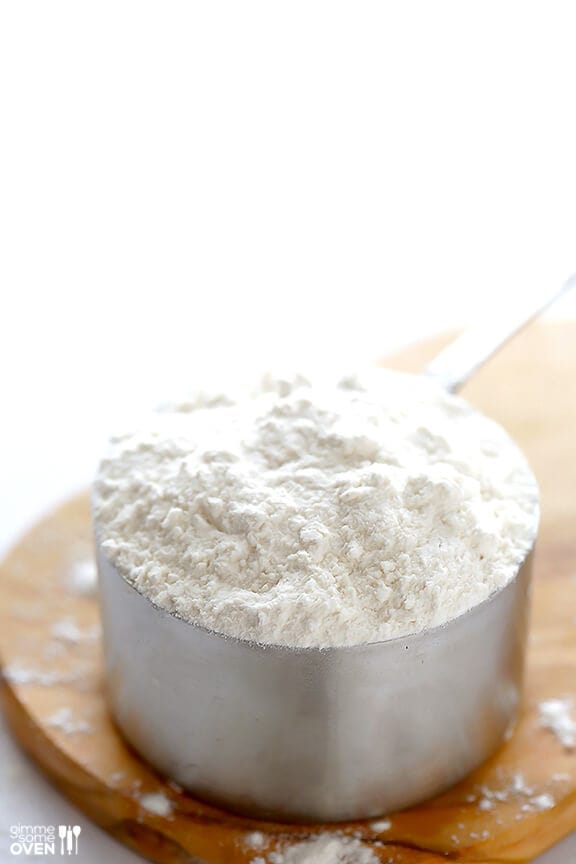
I’ve always said that I like a good balance of cooking and baking in my life. But man oh man, somehow I have gotten on a mega baking kick lately. And since I tend to prefer savory to sweet, the object of my affection as of late has been this epic 3-ingredient biscuit recipe that has pretty much changed my life. Ok, at least it has changed my breakfast. I have already made it 3 times since and counting!
That recipe is coming on the blog tomorrow. But for today, I thought I would post a quick tutorial for how to make one of the three ingredients homemade — self-rising flour!
It’s fairly rare that I have a bag of self-rising flour sitting in my pantry, partly because it doesn’t stay fresh as long with that baking powder mixed in. But mostly because it is so darn easy to make homemade! I’m not kidding. All you need are three easy ingredients — all-purpose (or pastry) flour, salt and baking powder — and you have an easy substitution ready for any recipe that calls for self-rising flour to help those biscuits, pancakes, cakes and more fluff up.
So bookmark this recipe if you ever need it for the future. (Hint hint — tomorrow!)
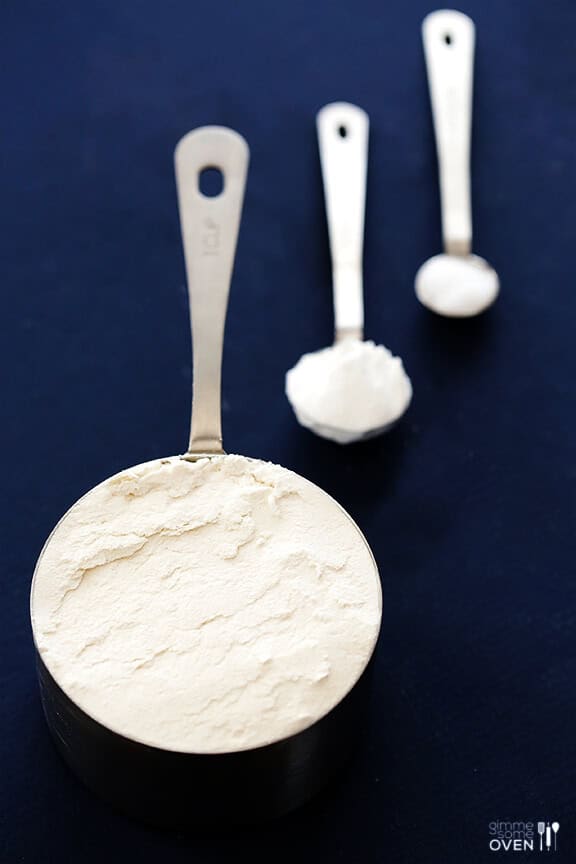
One quick note about the actual flour base in all-purpose flours. I have always used just traditional all-purpose flour in the substitution. But some brands (i.e. White Lily, King Arthur Flour and others) use cake or pastry flour in place of all-purpose, because it is low-protein. I’ve never found that it makes a huge difference. But if a recipe specifically calls for one of those, you might want to use cake or pastry flour instead.

Self-Rising Flour
Ingredients
- 1 cup all-purpose flour
- 1 ½ teaspoon baking powder
- ½ teaspoon salt
Instructions
- Whisk all ingredients together until blended.
 Did you make this?Let me know how it turned out in the comments below!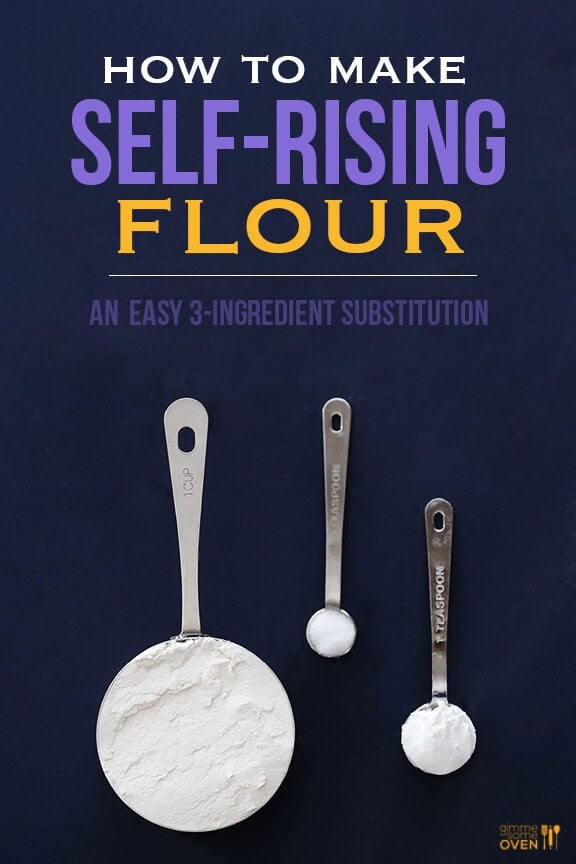


Would this work for gluten free flour?
Hi Deb! We haven’t tried it, so we can’t say for sure, but we think it honestly depends on the recipe. It may work for certain things!
Does it work the same if I double or triple the quantities?
Yes, you can make a larger batch of this!
If using 2 cups of flour do l double the baking powder and salt?
Yes, exactly.
I’m confused. My recipe ( rusks) calls for 1,5kg of self raising flour. I’ve always thought that 4 cups (250mls) are equal to 1kg. I measured my cups for the recipe into a Tupperware container and was horrified at the difference in quantity. Do I now measure the amount of cups and add the baking powder and salt ?? Or is there a standard mixture I can use for 1kg of flour
Hi Patricia! The measurements in this recipe worked for us, but if you have a recipe for self-rising flour that you already enjoy and you’re worried about the differences between the two, you might want to stick with the one you know.
Love this! Simple and easy thank you.
Hudson Cream Flour is a great flour! I had all purpose but was out of self rising. Used your recipe and it turned out great!
Thank you so much! My baking powder was out of date.
P
Pamamte and it still worked.
Pa
You’re so welcome Pam – we’re glad this worked out for you! :)
Can you make these with gluten free flour?
Hi Vickie! Do you mean can you make self-rising gluten-free flour?
Sounds a fab idea, but what is baking powder? Is this bicarbonate of soda?
Thank you in advance. Kiku
Hi Kiku! Baking powder is a leavening agent and it contains bicarbonate of soda/baking soda, as well as cream of tartar (a dry acid).
Hi! I just made this! How do you store this? Thank you for this!
Hi Stacey! You can store it in a tupperware container, canister or ziploc bag. :)
Just making sure if 1.5 tsp. baking powder is 1/2 instead of 1 1/2. The picture of the baking powder and the salt is not the same measurement-wise. The salt teaspoon is smaller. So which one is correct? Both salt and baking powder is 1/2 tsp. or 1/2 tsp salt and 1 1/2 tsp baking powder? Thank you.
Hi Fina! We’re sorry for the confusion on this. The recipe is correct for the self-rising flour (so it is 1 1/2 teaspoons of baking powder and 1/2 teaspoon of salt). We will re-edit this with easier-to-read fractions though. (We recently figured out that if we type a fraction like 1/2 into Google Docs, and then copy it to WordPress, it’ll show up as an actual fraction instead of the slash thing, hence the confusion.)