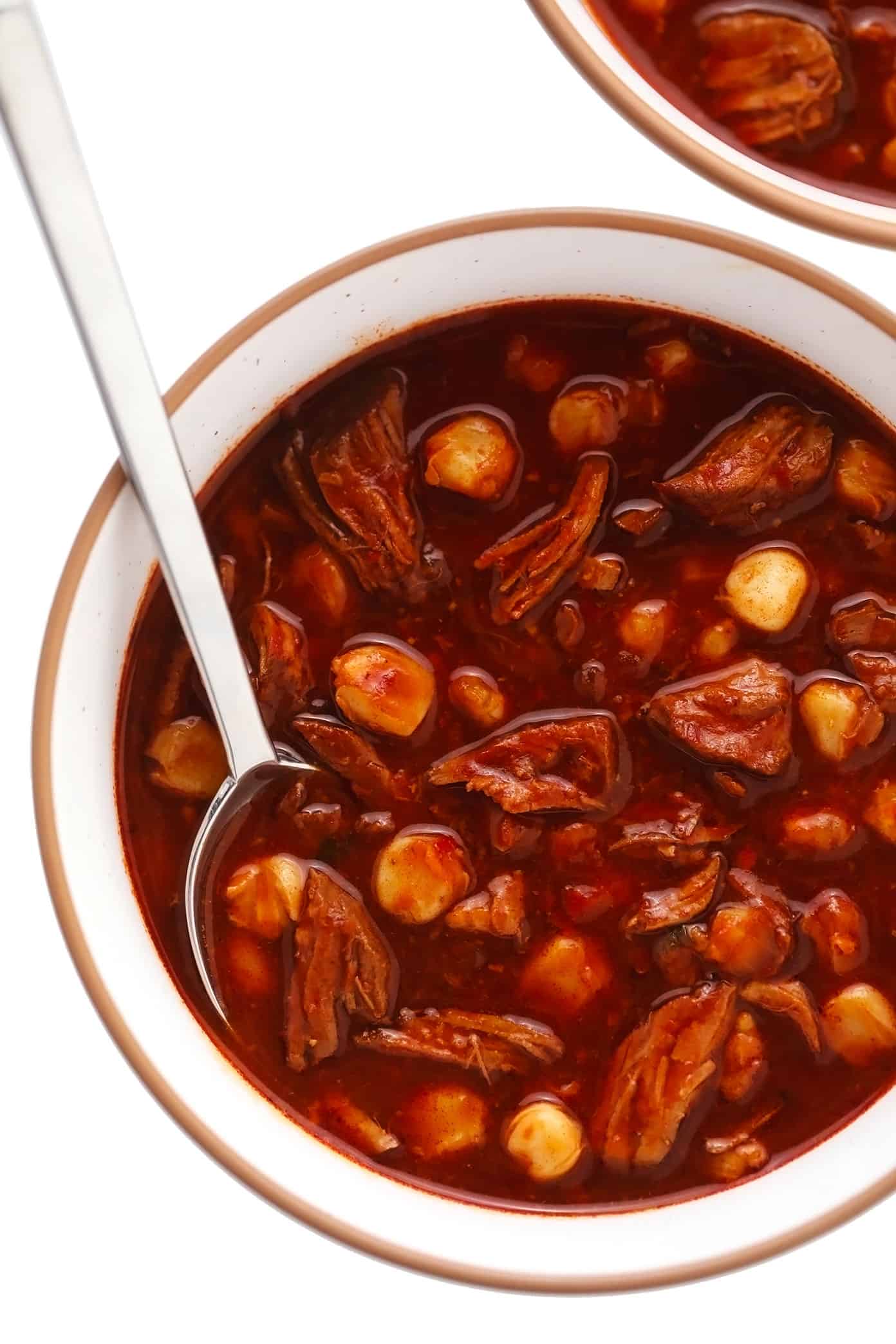
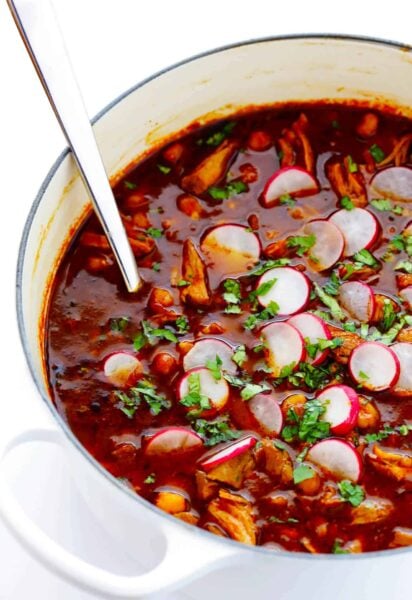
This traditional Mexican pozole recipe is made with tender pork and hominy and simmered in the most delicious chile broth, then piled high with all of your favorite fresh toppings. Stovetop, Crock-Pot and Instant Pot instructions included!
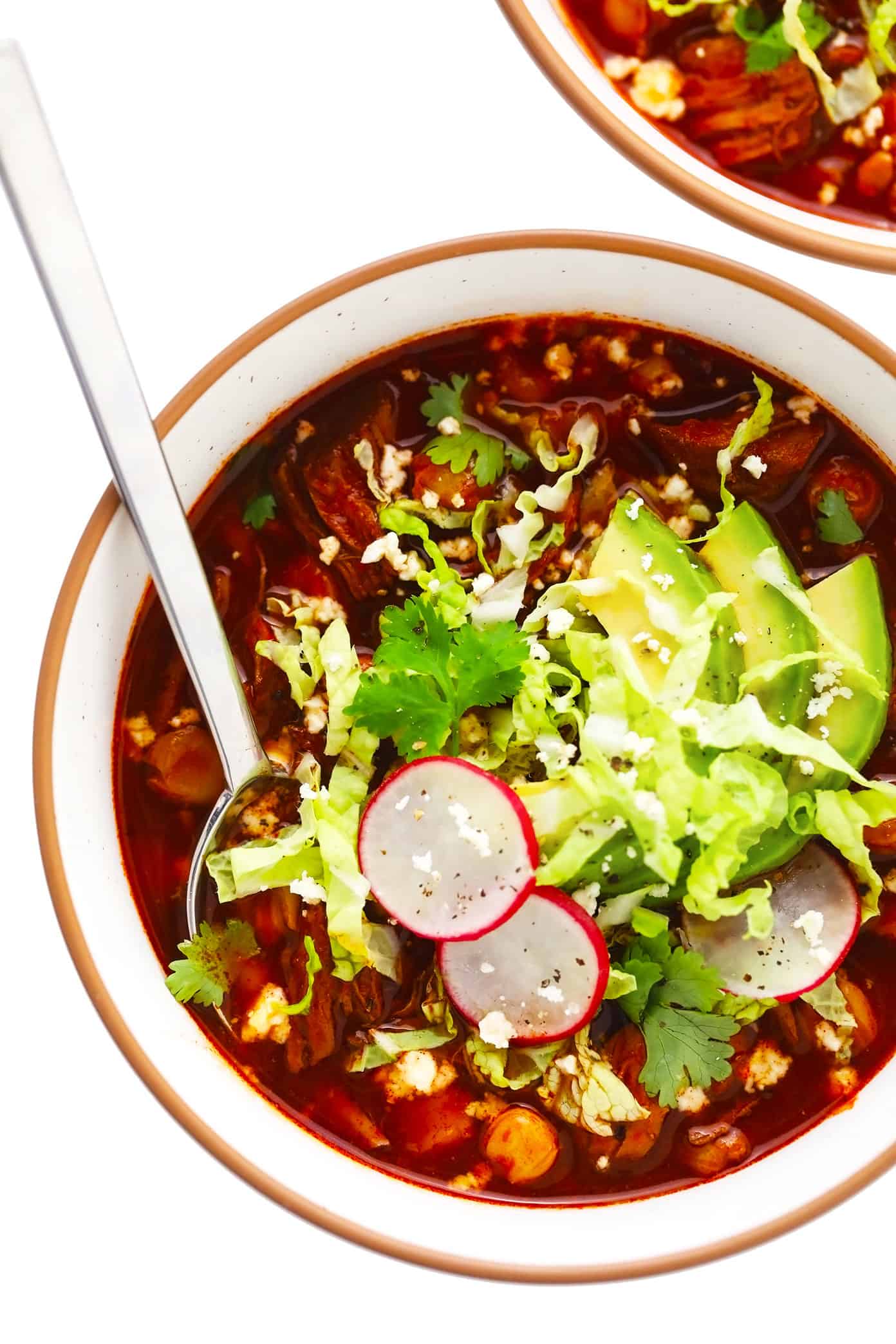
There are a million reasons to love a good bowl of pozole. But in my opinion, the magic of this traditional Mexican soup is found in its rich, vibrant, and incredibly flavorful red chile broth. ♡
By contrast to its pozole blanco (white) or pozole verde (green) cousins, pozole rojo is made with a blend of red chiles that gives this broth the most irresistible balance of savory, smoky, earthy, slightly sweet, and spicy flavors. And when slow simmered together with tender pork and hearty hominy, this later piled high with a generous handful of fresh toppings, this classic Mexican soup is my absolute idea of cozy comfort food to the max. Soooo much flavor!
To be honest, I love this recipe’s pozole broth so much that I’ve been known to make small batches of it just to sip from a mug on chilly winter nights. But when you’re craving a good and hearty bowl of soup, the traditional pork and hominy combo here will never let you down. You can either simmer all of the ingredients together for a few hours on the stovetop or toss everything in the Instant Pot or Crock-Pot. And while I’m going to insist that you use dried Mexican chiles to make this broth (no chili powder shortcuts here), I promise that they are incredibly easy to work with and dried chiles are absolutely essential when making pozole. I have also included notes for how to adjust the spice level here to make your batch exactly as mild or spicy as you prefer. And keep in mind that this recipe freezes wonderfully, so feel free to make a double batch while you’re at it!
Thousands of you have made and loved our pozole rojo recipe over the years. So in honor of the arrival of fall this week — hello, soup season! — I thought I would bump it back to the top of the site for anyone who has yet to give it a try. Let’s make some pozole!
Pozole Rojo Recipe | 1-Minute Video
Pozole Ingredients
Before we get to the full pozole recipe below, here are a few important notes about the ingredients you will need to make pozole rojo:
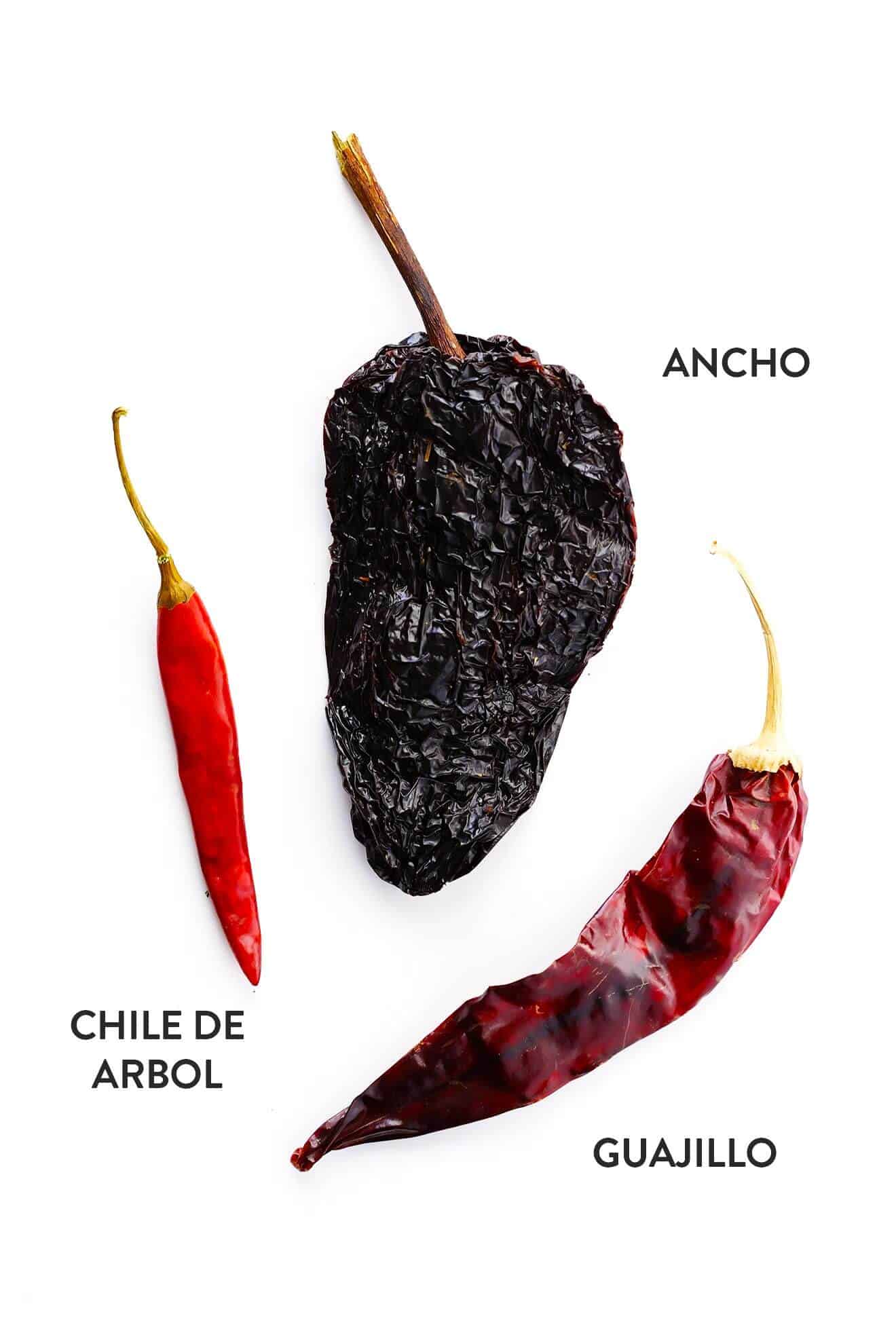
- Dried chile peppers: There are many different varieties of dried or fresh Mexican chiles that can be used to make red pozole broth, but this classic trio of dried chiles is my favorite. Each can typically be purchased at a Latino grocery or online. And I highly recommend briefly toasting the chiles before soaking to bring out their best flavor.
- Ancho chiles: These dried poblano peppers are fairly mild and have a smoky, earthy, raisin-like flavor.
- Guajillo chiles: These moderately hot peppers have a sharp, fruity flavor.
- Chiles de árbol: These bright red peppers are fiery hot and are a great way to amp up the heat. (Or feel free to omit these chiles if you prefer a milder soup.)
- Pork: I prefer to make pozole with boneless pork shoulder, which becomes incredibly tender and flavorful once it has been slow-cooked in this soup.
- Onion and garlic: I typically just sauté and stir onion and garlic into the broth, but you are welcome to purée them into the chile sauce if you prefer.
- Chicken stock: Chicken stock or vegetable stock will be delicious as our base. Feel free to add more or less, depending on how brothy you prefer your soup to be.
- Hominy: These puffy maize kernels (typically called maíz para pozole in Spanish) are traditionally used to make this soup extra-hearty. You can typically find them in the canned vegetable or Latino section of the grocery store.
- Seasonings: I keep the seasoning simple with a mix of ground cumin, ground oregano (or Mexican oregano, if you happen to have some) and bay leaves.
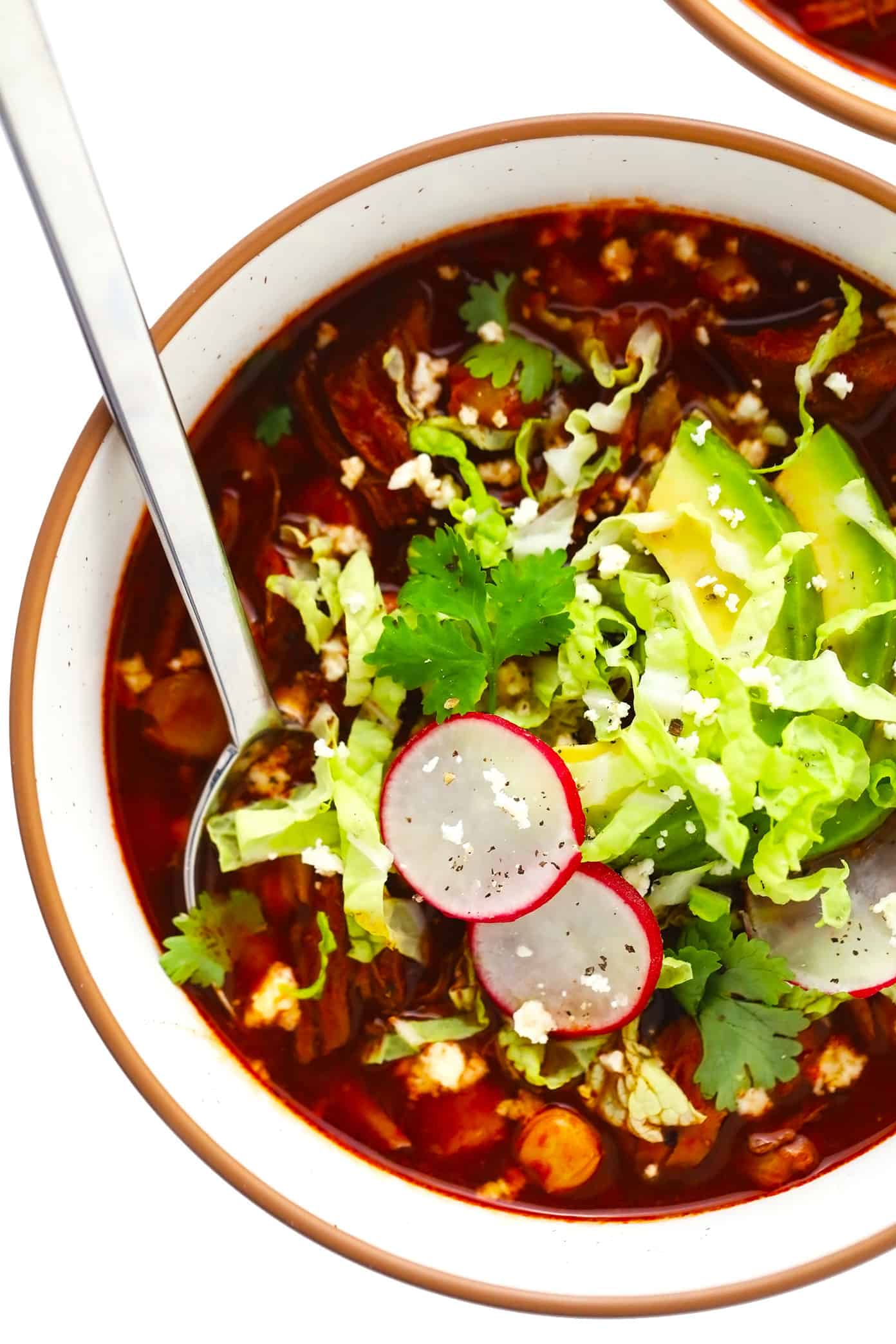
- Toppings: Finally, toppings are everything when it comes to pozole! So I highly recommend loading each serving up with a mix of whatever toppings you prefer, such as chopped fresh cilantro, crumbled cotíja cheese, avocado, lime wedges, shredded cabbage, Mexican crema, crumbled tortilla chips, and/or thinly-sliced radishes.
How To Make Pozole
Detailed instructions are included in the recipe below for how to make pozole in the Instant Pot (pressure cooker), Crock-Pot (slow cooker) or on the stovetop, but here is a quick overview:
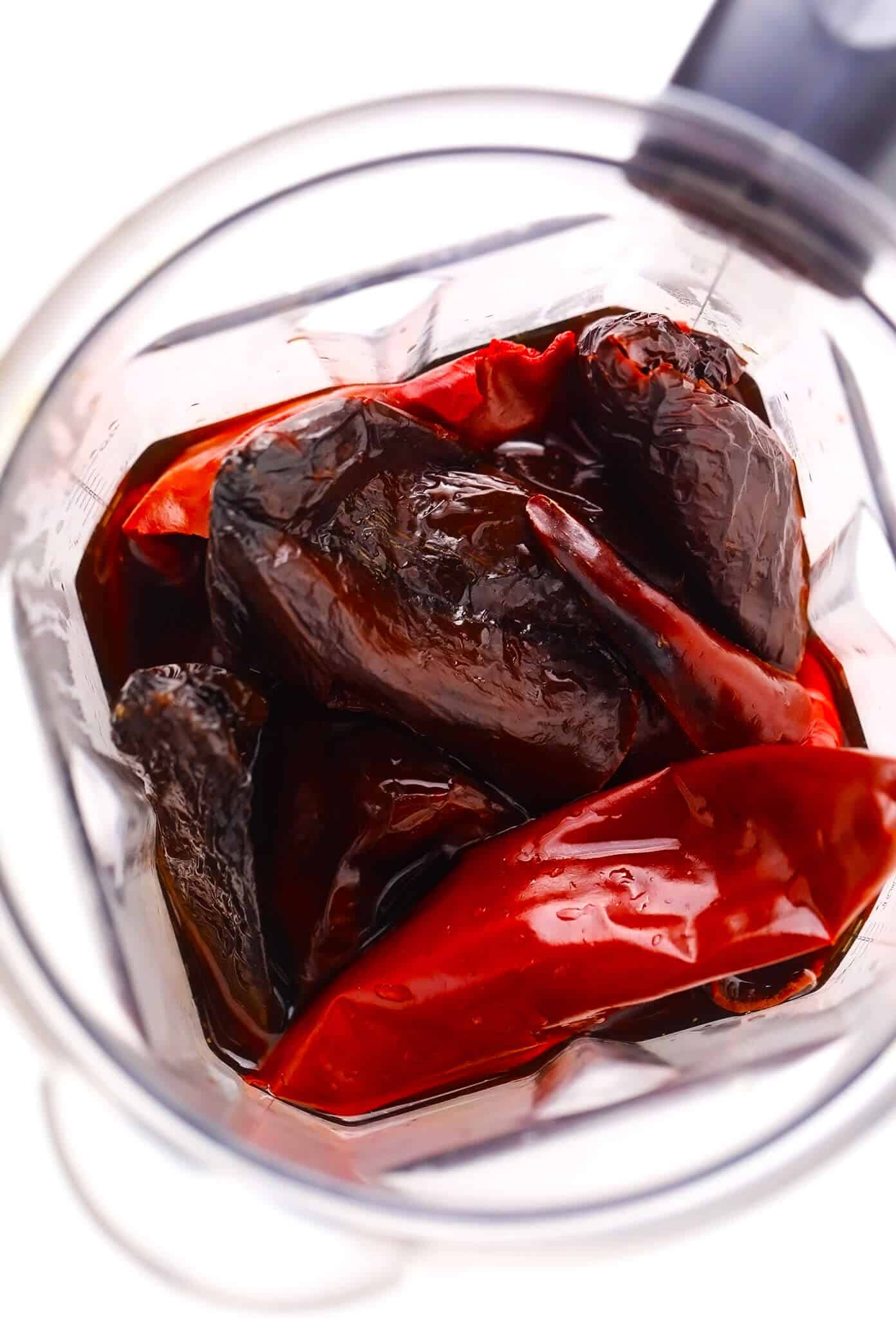
- Make the chile sauce: First, we will make the chile sauce by toasting and then soaking the dried chiles in hot water until softened. Then we will purée them with some of the soaking water in a blender of food processor until completely smooth.
- Sear the pork (optional): To add extra flavor, I recommend cutting the pork into 1.5-inch cubes and searing it briefly over high heat before cooking the pork in the broth. That said, feel free to skip this step if you are using the Crock-Pot or Instant Pot method, or if you would like to save time.
- Sauté the veggies (stovetop only): If making the stovetop method, we will then sauté the onion and garlic in a bit of oil until softened.
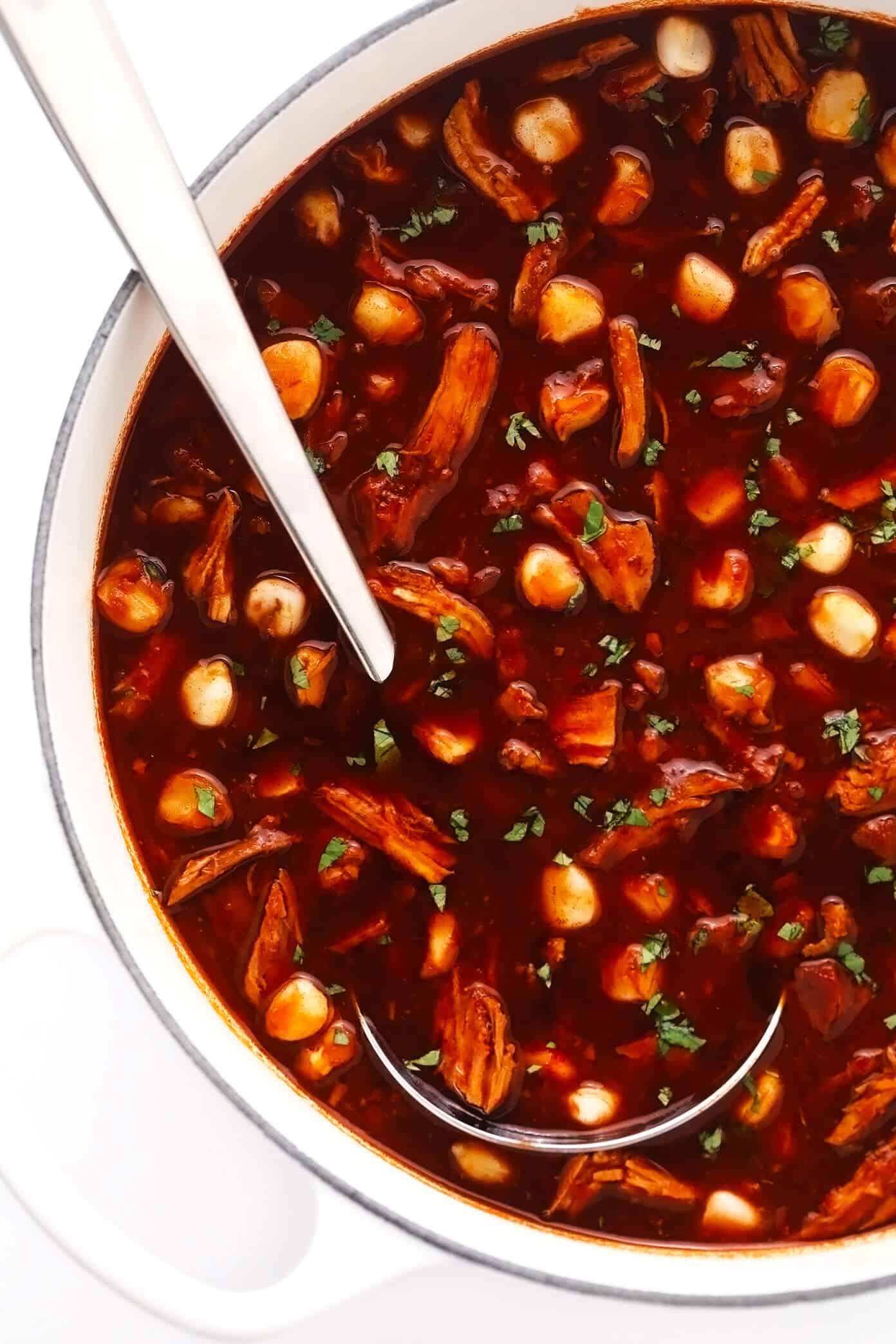
- Simmer: Then we will combine the pork, hominy, seasonings, chile sauce, cooked veggies and simmer (either in a covered stockpot, in the Crock-Pot or in the Instant Pot) until the pork is tender and shreds easily.
- Shred the pork: Next, we will remove the pork, shred it with two forks into bite sized pieces, and return it to the soup.
- Season: Taste and season the soup with salt and pepper (or any other seasonings) as needed.
- Serve: And finally, ladle up the pozole and serve it nice and warm, piled high with all of your favorite toppings.
Pozole Recipe Variations
Here are a few options for how to customize this pork pozole recipe to your liking…
- Strain the chile sauce: Feel free to strain the chile broth through a fine mesh strainer before adding it to the pozole, which is sometimes traditionally done to give the soup a thinner broth.
- Make it spicier/milder: Add in extra chiles de árbol to make the soup more spicy, or omit them (and half of the guajillo chiles) to make the soup more mild.
- Add extra veggies: While not necessarily traditional, the addition of extra veggies such as mushrooms, cauliflower, potatoes, peppers, or zucchini would be delicious.
- Add beans : Feel free to also add in a can of rinsed and drained pinto beans to give this soup some extra protein.
- Use chicken: To make chicken pozole, swap boneless chicken breasts or thighs for the pork and simmer the chicken until completely tender. It will not require as much cooking time as the pork.
Pozole FAQ
How do you pronounce pozole? In Spanish, pozole is pronounced “poh-SOH-leh.”
It is spelled pozole or posole? The correct spelling in Spanish is with a “z,” but versions of this soup in the United States are occasionally spelled with an “s.”
What does pozole mean? The Spanish word is believed to have originated from a Nahuatl word, pozoll, meaning “a variety of corn or maize.”
When is pozole traditionally served? In Mexico, pozole is often traditionally served for large gatherings and holidays, such as Mexican Independence Day, Christmas, New Years and more. Traditional red, white and green pozole recipes vary from region to region across Mexico, and there are also New Mexican and Tex-Mex versions of posole now as well.
More Mexican-Inspired Soup Recipes
Looking for more Mexican-inspired soup recipes to try? Here are a few of my faves…
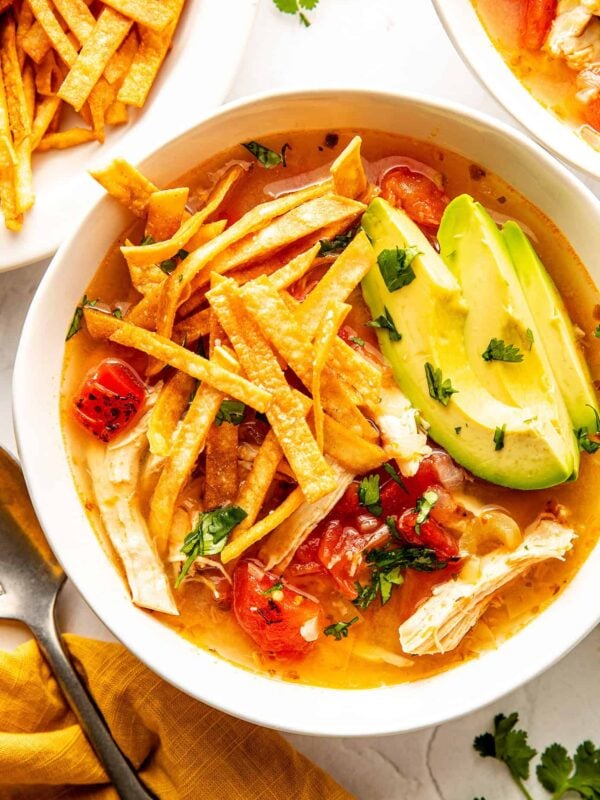
- Sopa Azteca (Tortilla Soup)
- 5-Ingredient White Chicken Chili
- Sweet Potato Enchilada Soup
- Mexican-Inspired Chicken Lentil Soup
Pozole Rojo

Ingredients
- 2 ounces dried ancho chiles
- 2 ounces dried guajillo chiles
- 2 to 3 chiles de arbol (optional*)
- 2 tablespoons avocado oil, divided
- 2 pounds boneless pork shoulder*, cut into 1.5-inch cubes
- 1 medium white onion, peeled and diced
- 8 cloves garlic, peeled and minced
- 7 to 8 cups chicken stock
- 3 (15-ounce) cans hominy, rinsed and drained
- 2 bay leaves
- 1 tablespoon ground cumin
- 1 tablespoon dried oregano (preferably Mexican oregano)
- optional toppings: chopped fresh cilantro, crumbled cotija cheese, diced avocado, fresh lime wedges, shredded cabbage, Mexican crema, and/or thinly-sliced radishes
Instructions
- Make the chile sauce. Cut off and discard the stems of the ancho chiles, guajillo chiles and chiles de arbol. Then shake out and discard their seeds. Briefly toast the chiles over an open gas flame (or you can press them into a hot stockpot over medium-high heat) for a few seconds per side until fragrant. Transfer all of the chiles in a heat-safe mixing bowl and cover them completely with boiling water. Let the chiles soak for about 30 minutes or until softened. Carefully use tongs to transfer the chiles to a blender or food processor, along with 2 cups of their soaking liquid. Puree for 1 minute or until completely smooth. (As always when blending hot liquids, be sure to tent the cap on the blender lid slightly open so that any hot air can escape while blender.) Set the chile sauce aside for later.
- Brown the pork. While the chiles are soaking, heat 1 tablespoon oil in a large stockpot over medium-high heat. Add the pork and sauté, rotating the pieces every few minutes, until all sides are seared and lightly browned, about 8-10 minutes. Transfer the pork to a clean plate and set aside.
- Sauté the veggies. Add the remaining 1 tablespoon oil to the same stockpot. Add the diced onion, and sauté for 4-5 minutes until softened, stirring occasionally. Add the garlic and sauté for 1-2 minutes more until fragrant, stirring frequently.
- Combine and simmer. Add in the 7 cups of the chicken stock, hominy, bay leaves, cumin, oregano, cooked pork, and the puréed chile sauce and stir to combine. Continue cooking until the soup reaches a simmer, then reduce heat to medium-low to maintain a very low simmer, cover, and cook for 1 1/2 to 2 hours, stirring occasionally, until the pork is tender and shreds easily.
- Shred the pork. Once the pork is tender, use tongs to transfer it to a cutting board and shred it into bite-sized pieces using two forks. Return the pork to the soup and stir to combine.
- Season. If the broth is too thick for your liking, feel free to add in 1 more cup of chicken stock to thin it out. Stir, taste, and season the soup with salt and pepper as needed.
- Serve. Serve hot, garnished with lots of your favorite toppings, and enjoy!
Notes
 Did you make this?Let me know how it turned out in the comments below!
This post contains affiliate links.

Oh my gosh, I LOVE pozole! I had it for the first time when I was a missionary for my church. A Mexican lady made it and I was enchanted! Now every time I meet a Hispanic person, I say, “Do you know how to make pozole?” Not really. But it is one of the first thoughts that comes to my mind. Your recipe looks so authentic and wonderful! I am dying to try it!
This looks delicious! I live in KC too and wonder if you might share the name of the grocery store where you find these amazing chiles.
Thank you, Sara — we hope you enjoy it! And Ali loves the Price Chopper at Roe and 35, or the Sun Fresh on 18th Street. Both have great selections of dried chiles!
And, yes, the Ghost or Bhut Jolokia pepper is extremely hot. Example: most have experienced the jalapeno and serrano – both have a nice spice level.
To give you an idea of just how hot a ghost pepper is: Jalapeño peppers range from 2,500 to 8,000 on the Scoville scale, while Ghost peppers (a.k.a. the Bhut Jolokia) weight in between 855,000 – 1,041,427 Scoville heat units so use caution because a little piece goes a long, long – long way – and wear gloves for sure when working with that one.
Whoa, that’s crazy! I think we’ll have to just stay away from those! :)
Hi Ali,
Pozole is a soup I’ve been dying to make and yours looks delicious. I’m especially fond of colorado (red) sauces, so thanks!
I can’t find the pressure cooker tips. Did you forget them or is it just my blind idiocy?
Thank you, we hope you love this! :) And oops, we mistakenly left those out (sorry about that!) — adding them in now!
Your blog is among my favorites. I have lots of Mexican friends who are marvelous cooks. That being said, when making pozole rojo, please strain the puree thru a fine mesh strainer, working the liquid gently thru with a spatula. I have a Vitamix and nothing turns everything to liquid or a powder like that thing. However, please strain your puree thru a fine mesh strainer. The little bits of pepper can make your pozole bitter when eating. I’m not promoting anything here, but if you want the authority on Mexican cooking, refer to any of Rick Bayless’s books on Mexican cuisine. One more suggestion, tear and toast the chilies in a little oil just until fragrant and start to darken (be careful – do not burn – they can get really bitter), then soak them per your recipe. Toasting releases the essential oils and give your pozole a nice depth of smoky flavor. If you want a less spicy pozole, substitute the arbol with another guajillo or two. One more note on how to select fresh dried chiles in a bag; they should be flexible without breaking. If they shatter, they’re too old and dry.
Just talking from experience…… Dave
This looks INCREDIBLE! Also I’m dying to know the grocery store of which you speak (because it sounds magical) as I live in Iowa and frequently make trips “down south” to KC. Definitely making this soon.
Thanks, Holly — we hope you enjoy it! And Ali loves the Price Chopper at Roe and 35, or the Sun Fresh on 18th Street. Both have great selections of dried chiles!
That looks amazing! I’m just curious, which grocery store you are referring to? I feel like I need to take a field trip!
Thanks, Lori! Ali loves the Price Chopper at Roe and 35, or the Sun Fresh on 18th Street. Both have great selections of dried chiles!
Yum! That looks awesome. And did I miss it, or did you say which grocery store that is with all those Latin American specialties? We moved to Lawrence from AZ almost three years ago and still make our own tortillas a lot of the time bc the selection here is …lacking. :) Although there are some good homemade ones at our co-op, but they’re pricey. Thank you!!
Thanks, Tiffany — we hope you enjoy this! And Ali loves the Price Chopper at Roe and 35, or the Sun Fresh on 18th Street. Both have great selections of dried chiles!
Oh MY!!! How wonderful this looks. Always wanted to cook with dried chilies, but never knew what to do! Thanks!
Thank you, Lisa — we hope you love this as much as we did!
I love your posts, but this one its beyond….
As a mexican I can tell you that your recipe it’s authentic and I feel extremely happy to see that you went that extra mile in Mexican Food. Our food it’s more than tacos! Pozole it’s a typical dish in many states of Mexico and we usually eat it in celebrations as the indepence day or even new year’s eve! We eat it with totopos (tortilla chips) and as toppings crushed pepper, oregano, lettuce and radishes and lemon. We don’t put cheese, but in case you want to add some and you live in Canada, Canadian Feta taste a lot as Cotija cheese.
Little tip: It taste much better the second day, like almost every leftover.
Thanks for including Mexican cuisine in your posts and if you wanna try more recipes with chiles try Mole and Adobo!
Thank you for your sweet words, Arayanzi! We’re glad you enjoy the blog and we’re happy you like this recipe — we hope you can give it a try sometime! :)