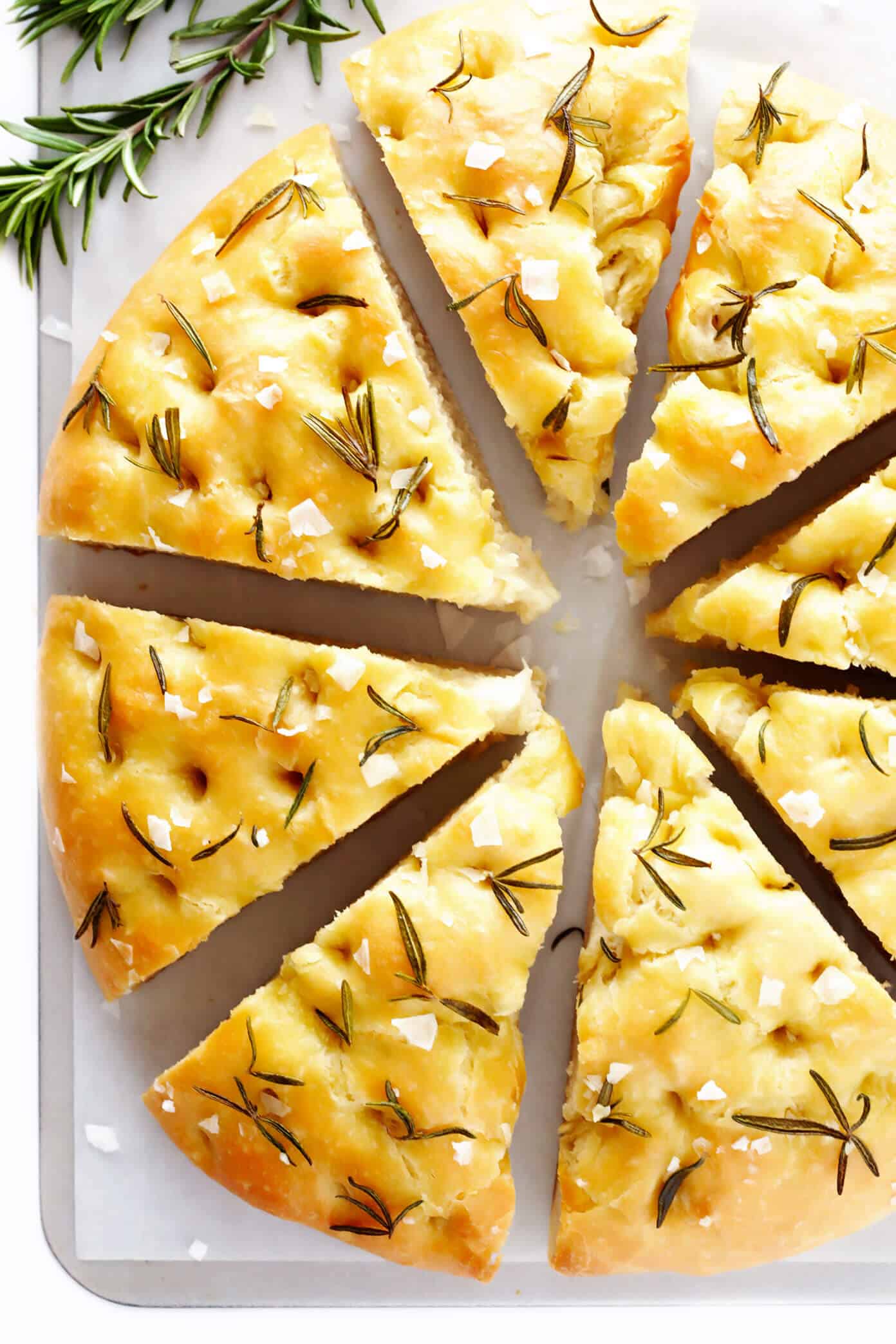
This delicious Rosemary Focaccia Bread recipe is easy to make, and topped with fresh rosemary, olive oil and flaky sea salt.

Meet my all-time favorite focaccia bread recipe. ♡
It was actually one of the very first bread recipes that I learned to make years ago, and still continues to be a fave because it is so simple to make. And most importantly, it’s just so dang good.
It’s perfectly soft and fluffy and satisfyingly chewy. It’s sprinkled with lots of fresh rosemary and crunchy flaky sea salt, and drizzled with extra olive oil just before serving, which soaks perfectly into all of those little classic holes that you have poked in the bread. It’s easy to make by hand, or even easier to make with the help of a stand mixer. It also happens to be naturally vegan, and can be shaped into a free-form round or pressed into a rectangular baking dish. And best of all, it is just the ultimate cozy carbohydrate comfort food. I know you’re going to love it.
Also, if you happen to be new to working with yeast in bread, please don’t let that deter you from making focaccia! This recipe is a great place to begin when working with yeast, and I will walk you through each step of the process so that all of your questions are answered. You’ve got this.
Let’s make some rosemary focaccia!
Rosemary Focaccia Bread Recipe | 1-Minute Video
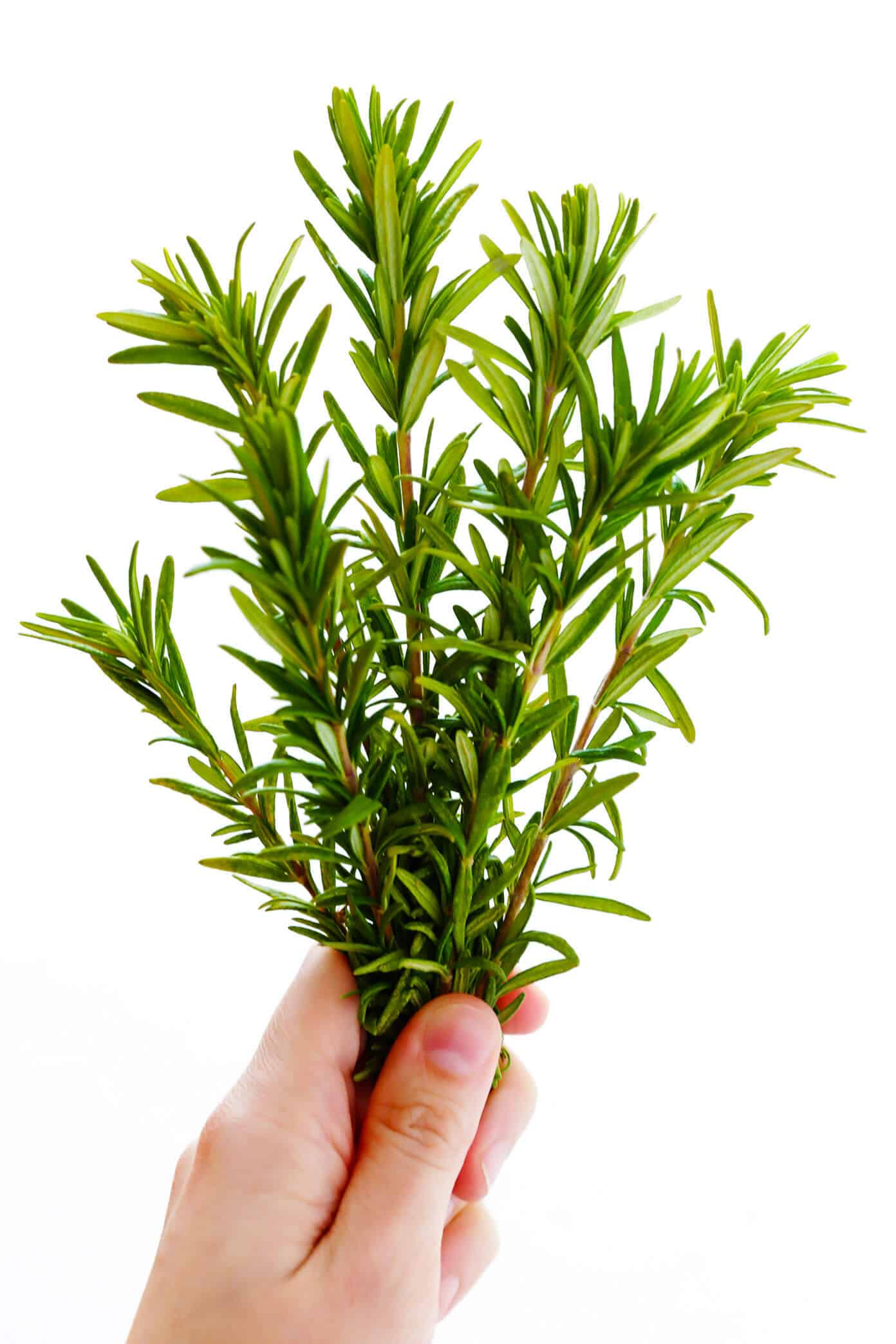
Rosemary Focaccia Bread Ingredients:
To make this rosemary focaccia bread recipe (pronounced “foh-kah-chah”, by the way), you will need:
- Warm water: Since we are working with active dry yeast in this recipe, it’s important that we use warm water to dissolve it. I highly recommend using a cooking thermometer to double-check the temperature of the water if possible. (It should be around 110°F.)
- Sugar or honey: Whichever you have on hand, to give the bread a hint of sweetness and help to activate the yeast.
- Active dry yeast: You will need one packet (or 2.25 teaspoons) to make this focaccia bread.
- Flour: Basic all-purpose flour will be great!
- Olive oil: Some of which we will mix into the actual bread dough, plus extra for drizzling on top once the focaccia has baked.
- Flaky sea salt: Some of which we will mix into the actual bread dough, plus extra for sprinkling on top of the dough before baking. If you don’t have flaky sea salt on hand, you can use fine sea salt, but be sure to reduce the amount by half so that the bread isn’t too salty.
- Fresh rosemary: To sprinkle on top of the dough and add that delicious earthy rosemary flavor. (Feel free to finely chop the fresh rosemary if you would like smaller rosemary sprinkles.)
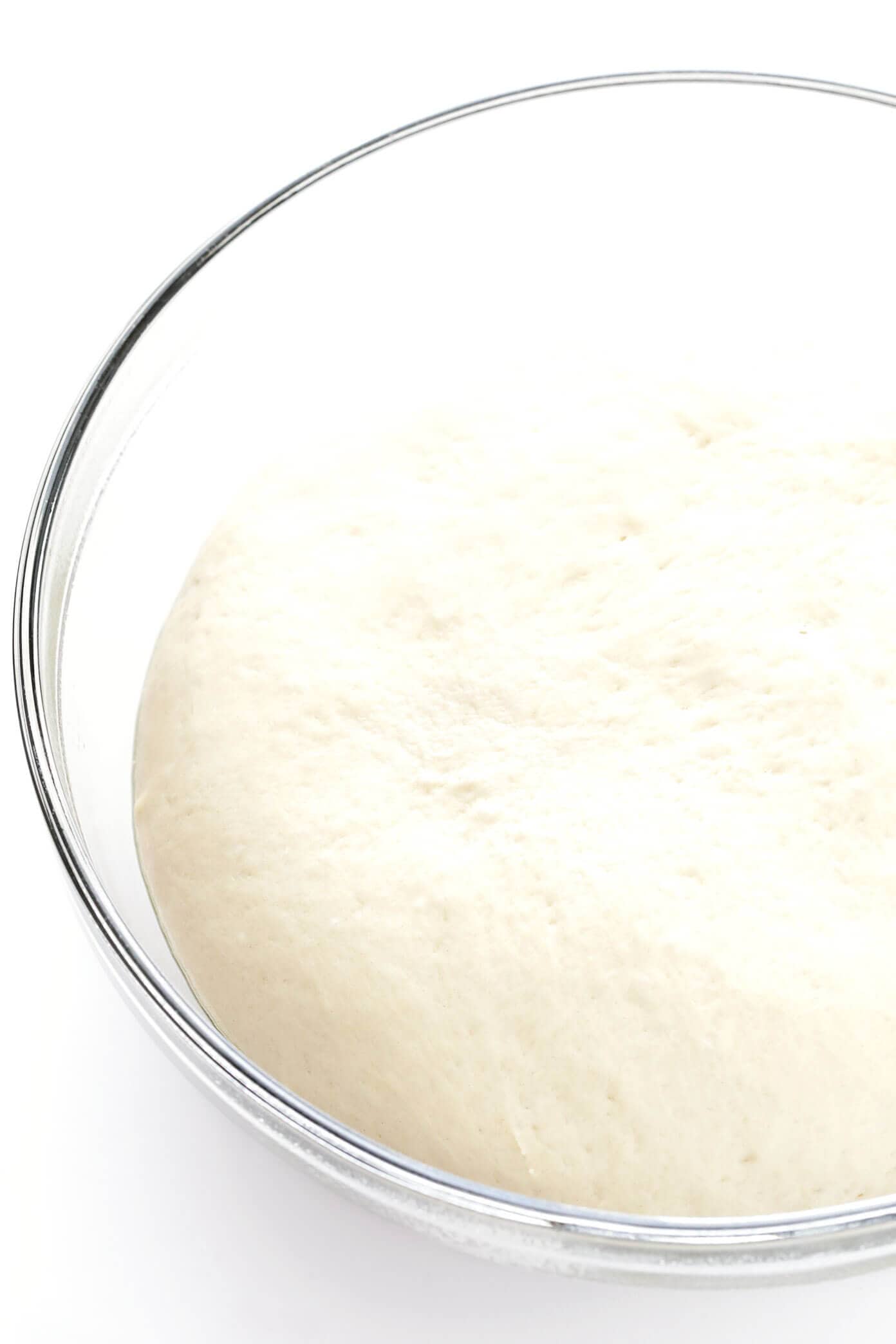
How To Make Focaccia Bread:
Here are the basic steps to make this rosemary focaccia bread recipe (full instructions included in the recipe below, as always):
- Proof the yeast. In the warm water and sugar. (I highly recommend using a thermometer to measure the temperature of the water, so that it is not too hot or too cold.)
- Knead the dough*. Gradually add in the flour, olive oil and salt. Then knead for 5 minutes using the dough attachment or a stand mixer, or knead the dough by hand.
- First dough rise. Shape the dough into a ball and place it in a greased mixing bowl, and cover with a damp towel. Let the dough rest in a warm location for 45-60 minutes, or until it has doubled in size.
- Second dough rise. Shape the dough into a large circle or rectangle until that the dough is about 1/2-inch thick*. Cover and let the dough continue to rise for another 20 minutes.
- Prepare the dough. Heat oven to 400°F. Transfer the dough to a large parchment-covered baking sheet (or press it into a 9 x 13-inch baking dish). Use your fingers to poke deep dents — like seriously, poke all the way down until you touch the baking sheet — all over the surface of the dough. Then drizzle a tablespoon or two of olive oil evenly all over the top of the dough, and sprinkle evenly with the fresh rosemary needles and sea salt.
- Bake. Bake for 20 minutes, or until the dough is slightly golden and cooked through.
- Serve. Remove from the oven, and drizzle with a little more olive oil if desired. Slice, and serve warm.
*If you do not have a stand mixer, no prob! Just complete step 1 in a large mixing bowl. Gradually stir in the flour, olive oil and salt until a shaggy dough begins to form. Then turn the dough out onto a floured surface and knead by hand for 5 minutes until smooth, adding extra flour if the dough feels too sticky, and continue on with the recipe as directed.
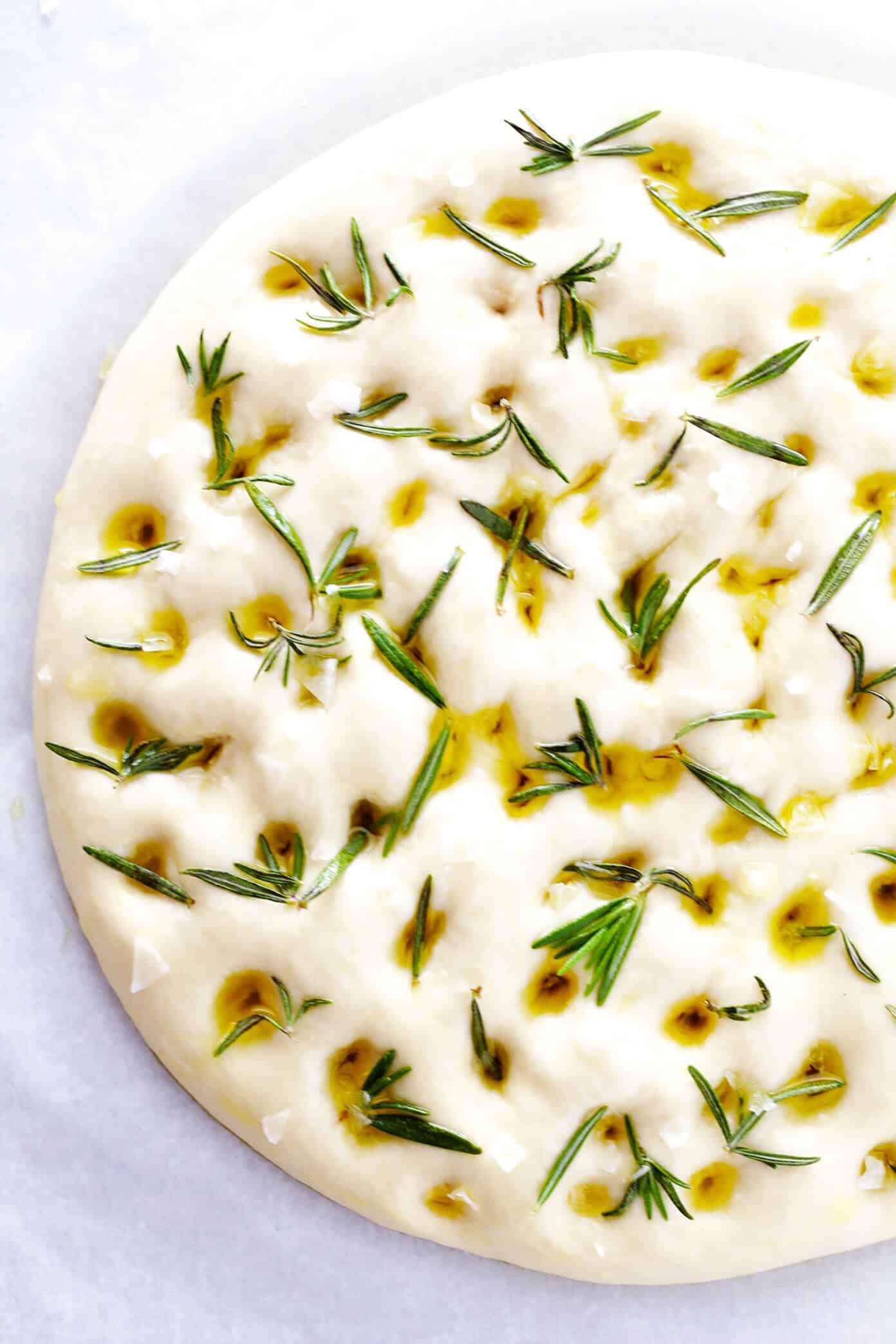
Possible Recipe Variations:
Want to customize this recipe? Feel free to…
- Add garlic. Finely mince and mix a large clove of fresh garlic into the dough to give it some extra garlicky flavor.
- Add Parmesan. This focaccia would also be delicious with some Parmesan cheese sprinkled on top!
- Use different fresh herbs. In place of (or in addition to) the fresh rosemary, feel free to use fresh tarragon or sage.
- Use dried herbs. If you don’t have fresh herbs on hand, you are welcome to use dried herbs instead (such as dried rosemary or Italian seasoning). If you use dried herbs, I recommend kneading them into the dough itself rather than sprinkling them on top so that they do not burn in the oven.
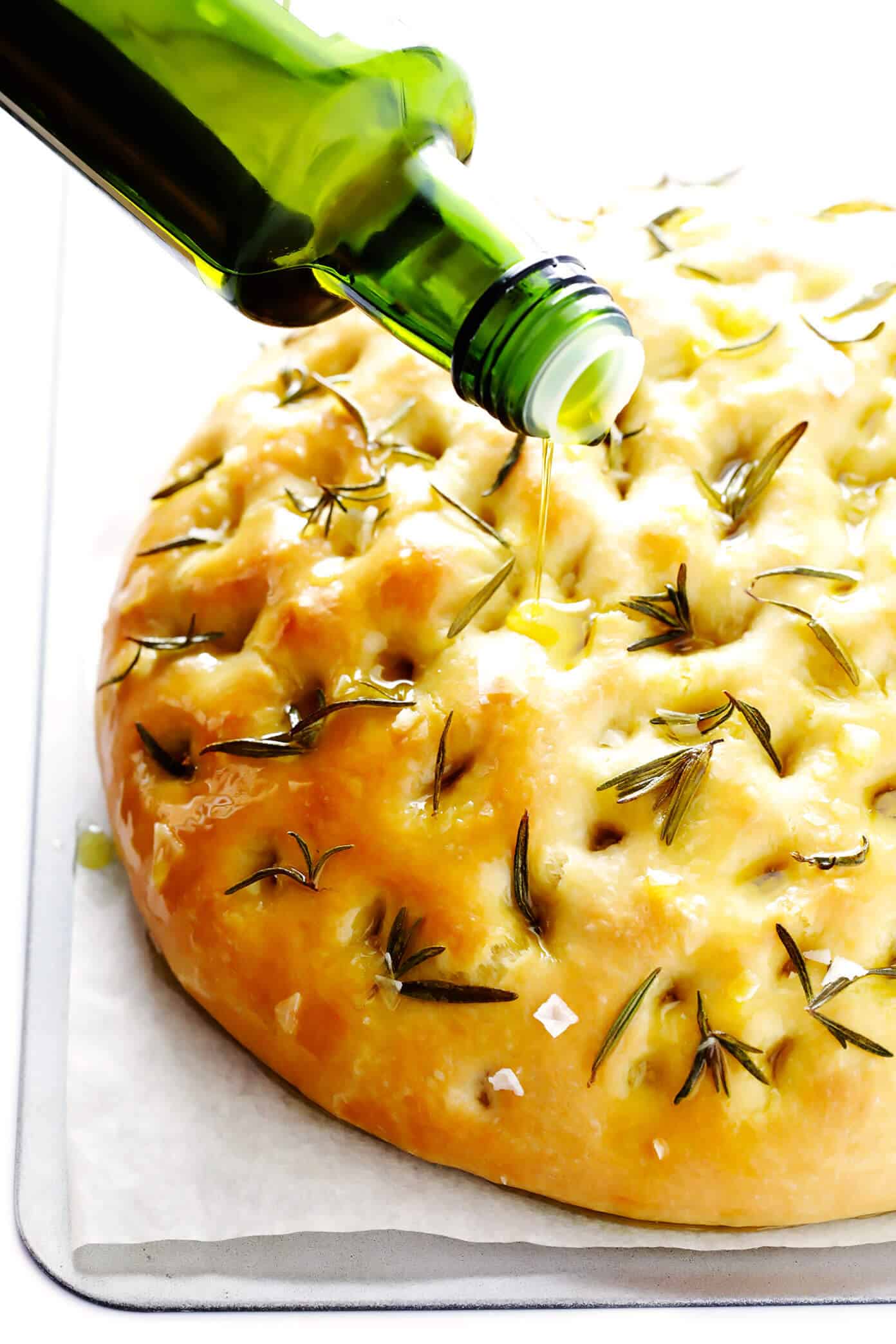
More Favorite Bread Recipes:
Interested in doing some more bread-baking? Here are a few of my favorite easy bread recipes on the blog:
Rosemary Focaccia Bread

Ingredients
- 1 1/3 cup warm water (about 110°F)
- 2 teaspoons sugar or honey
- 1 (0.25 ounce) package active-dry yeast
- 3 1/2 cups all purpose flour
- 1/4 cup extra virgin olive oil, plus more for drizzling
- 2 teaspoons flaky sea salt, plus extra for sprinkling*
- 2 sprigs fresh rosemary
Instructions
- Proof the yeast. Add warm water (about 110°F, which you can measure with a thermometer if you want to be sure it’s the right temp) and sugar to the bowl of a stand mixer with the dough attachment, and stir to combine. Sprinkle the yeast on top of the water. Give the yeast a quick stir to mix it in with the water. Then let it sit for 5-10 minute until the yeast is foamy.
- Knead the dough. (See alterate instructions below to knead by hand.) Set the mixer to low speed, and add gradually flour, olive oil and salt. Increase speed to medium-low, and continue mixing the dough for 5 minutes. (If the dough is too sticky and isn’t pulling away from the sides of the bowl, add in an extra 1/4 cup flour while it is mixing.)
- First dough rise. Remove dough from the mixing bowl, and use your hands to shape it into a ball. Grease the mixing bowl (or a separate bowl) with olive oil or cooking spray, then place the dough ball back in the bowl and cover it with a damp towel. Place in a warm location (I set mine by a sunny window) and let the dough rise for 45-60 minutes, or until it has nearly doubled in size.
- Second dough rise. Turn the dough onto a floured surface, and roll it out into a large circle or rectangle until that the dough is about 1/2-inch thick*. Cover the dough again with the damp towel, and let the dough continue to rise for another 20 minutes.
- Prepare the dough. Preheat oven to 400°F. Transfer the dough to a large parchment-covered baking sheet (or press it into a 9 x 13-inch baking dish). Use your fingers to poke deep dents (seriously, poke all the way down to the baking sheet!) all over the surface of the dough. Drizzle a tablespoon or two of olive oil evenly all over the top of the dough, and sprinkle evenly with the fresh rosemary needles and sea salt.
- Bake. Bake for 20 minutes, or until the dough is slightly golden and cooked through.
- Serve. Remove from the oven, and drizzle with a little more olive oil if desired. Slice, and serve warm.
Notes
 Did you make this?Let me know how it turned out in the comments below!



I have used this recipe multiple times over the last year and it has never failed me. Love how easy and quick it is – with consistently better results (in my opinion) than the longer, more complicated recipes from sites like Bon Appetit.
a question –
I was planning on making this Foccacia this evening. So I went ahead and mixed the dough etc etc. Now I might not be able to bake it tonight- it’s already 6 hours since I’ve mixed the dough. The volume has doubled! Can I leave it in the refrigerator and bake it tomorrow?
Deepa, I do this frequently with bread doughs. After removing from the fridge, you roll it out, poke the holes, and let it do the second rise. It will take longer to rise since you’re having to let it get back to room temp and rising temp. Letting it rest overnight in the fridge can help develop some additional subtle flavors in the dough/bread.
Outstanding! This is the second time around replacing the rosemary with Brochette mix from McCormick. I added about a teaspoon in with the dough while mixing. For the second rise try sprinkling a little more, maybe a teaspoon on the top with the olive oil.
I split the dough into two pieces before this second rise and for cooking in pie pans, just right thickness. Cooked until internal temp is about 200 degrees f that took 16 or 17 minutes.
Try splitting the bread in half, loading it with Italian meats, EVOO, lettuce, roasted red peppers, and even the kitchen sink. What a meal!
This was my first try and it came out great!! Will make again.
We used this to make focaccia art! Delicious & beautiful ?
Thank you so much for this easy and delicious recipe. I upgraded my focaccia with black olives, arrabiata and fleur de sel. My kids loved and devoured it.
Mine came out extremely dry and dense. Would not serve this to anyone. Have made many other focaccia recipes that are far better and way more fluffy/airy.
How did you measure out your flour? I always weigh out my flour using the conversion of 120 grams per cup. This dough should be a high hydration dough.
So delicious and easy! Will definitely make again.
This recipe was delicious. Turned out perfectly. Thank you for sharing.
I’m not sure if I’m missing something in this recipe but as far as I can tell it only calls for 1/3 of a cup of water which is much too little for this quantity of flour. I frantically added some water and I’m trying to get the right consistency. Did I miss the additional water somewhere on this webpage?
The recipe calls for 1 + 1/3 cups of water.
It calls for 1 & 1/3 cup of water
this stuff bussin