This traditional miso soup recipe is quick and easy to make with just 7 simple ingredients in just 20 minutes.
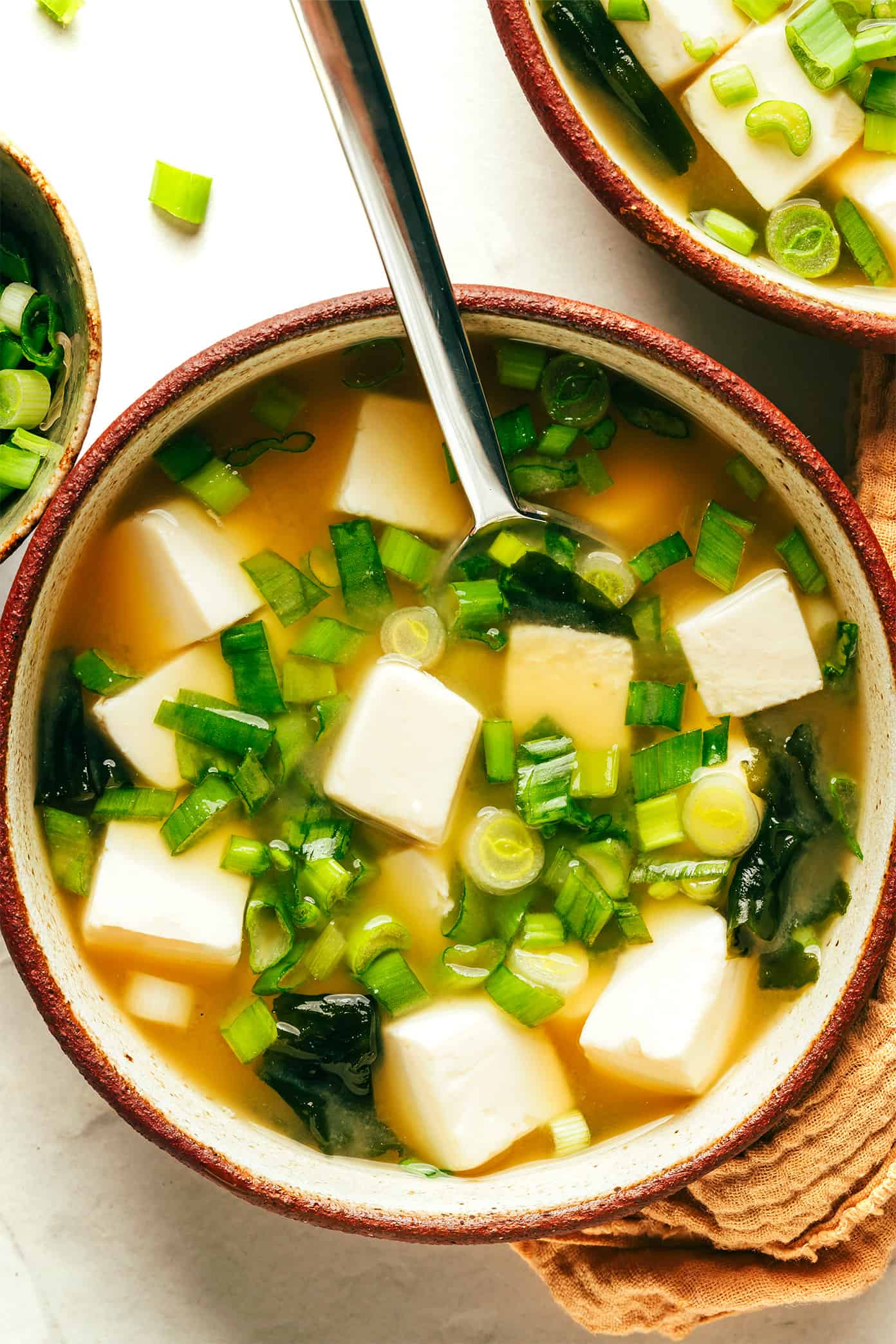
Restaurant-Quality Miso Soup at Home

If you’ve never made homemade miso soup before, you’re about to see just how simple (and delicious) it can be. ♡
This cozy Japanese classic comes together in less than 30 minutes with just a handful of ingredients and tastes so rich and comforting every single time. Once you learn how to make the dashi broth (the heart of any good miso soup), you’ll be amazed by how much flavor you can create from such humble pantry staples.
Whether you serve it as a starter, a light lunch, or a side with your favorite rice bowls or sushi night at home (our favorite!), this recipe is one you’ll come back to again and again. We absolutely love it in our family!
Miso Soup Recipe | 1-Minute Video

What Is Miso Soup?
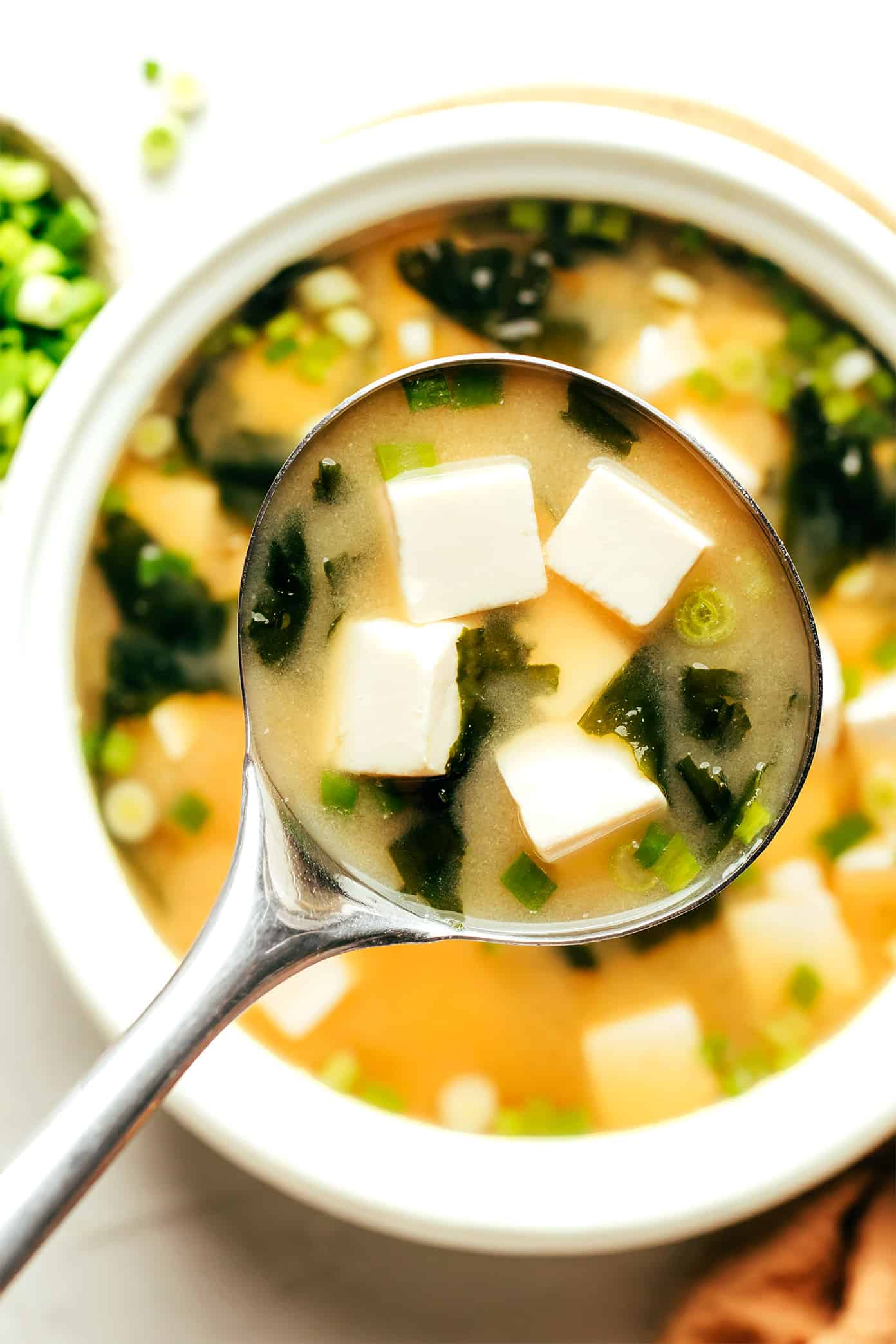
Miso soup (味噌汁, miso shiru) is a traditional Japanese soup that’s as comforting as it is simple. It’s typically made with dashi, a light and savory broth infused with kombu (dried kelp) and bonito flakes (dried fish flakes), which gives the soup its signature rich umami depth. The dashi is then combined with miso paste — a fermented soybean paste — which adds that irresistible salty, savory, and slightly sweet flavor.
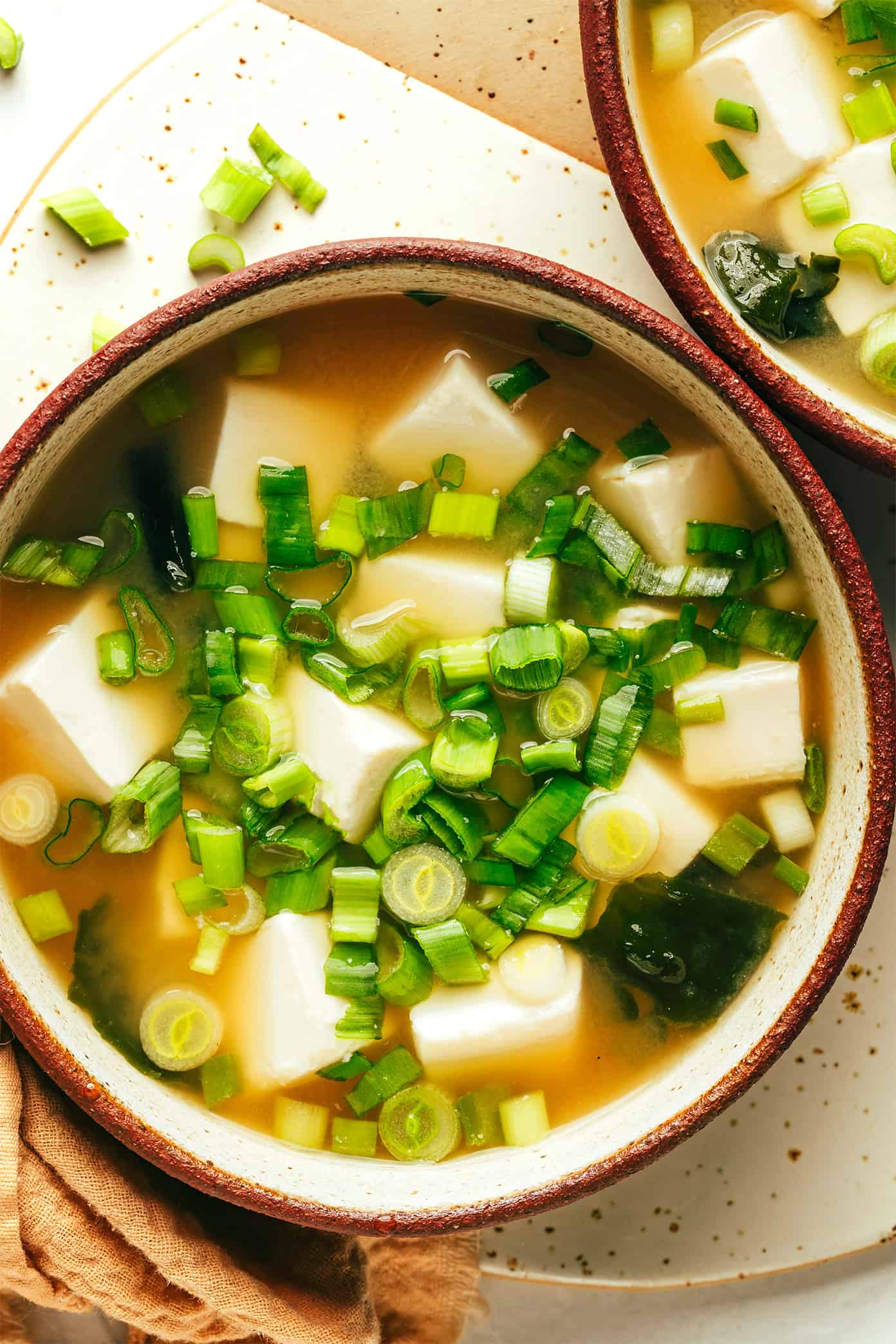
Most versions also include small cubes of tofu, rehydrated wakame seaweed, and thinly sliced scallions. You’ll often find it served alongside rice or sushi in Japanese restaurants, but it’s also a staple in home kitchens throughout Japan. Once you make it from scratch, you’ll understand why.
Miso Soup Ingredients
You only need a handful of simple ingredients to make authentic miso soup at home:
- Water: The base for your broth. Start with cold water to properly infuse the kombu.
- Kombu: Dried kelp sheets that add subtle ocean flavor and umami to the dashi.
- Bonito flakes: Dried, shaved fish flakes that deepen the flavor of the broth. (You can also use kombu and shiitake instead for a vegan version!)
- Soft silken tofu: Traditionally used for its delicate texture that contrasts beautifully with the warm broth.
- Wakame seaweed: A mild, rehydrated sea vegetable that adds a touch of minerality and texture.
- White miso paste: The star of the show — fermented soybean paste that’s smooth, mild, and slightly sweet.
- Scallions: Freshly sliced green onions that add brightness and a gentle onion flavor right at the end.

Miso Soup Tips
Here are a few helpful tips to make your miso soup turn out perfectly every time:
- Don’t boil the miso. Miso paste should never reach a full boil — high heat destroys its delicate flavor and beneficial probiotics. Gently warm the soup instead.
- Use cold water for soaking kombu. Starting with cold water helps the kombu gradually release its flavor and prevents the broth from turning slimy.
- Skip pressing the bonito flakes. When straining the dashi, let the liquid drain naturally. Pressing will release bitterness into the broth.
- Add miso with a strainer or ladle. This prevents clumps and helps it dissolve smoothly into the broth.
- Adjust the miso flavor to taste. White miso is mild and slightly sweet; for stronger umami, try mixing in a bit of red miso.
- Soak wakame just before adding. It rehydrates quickly — usually in under 5 minutes — and will continue to expand in the hot broth.
- Serve immediately. Miso soup is best enjoyed fresh. If it sits too long, the tofu and seaweed can over-soften and the flavor will dull.
Recipe Variations
Once you’ve mastered the base recipe, have fun customizing it!
- Add mushrooms: Shiitake or enoki add rich, earthy flavor.
- Stir in greens: Spinach, bok choy, or napa cabbage work beautifully.
- Use red or mixed miso: For a deeper, saltier broth with extra umami.
- Add noodles: Udon, soba, or rice noodles can make this a heartier meal.
- Include protein: Add shrimp, poached eggs, or shredded chicken for more substance.
- Top it off: Try sesame seeds, chili oil, or a drizzle of toasted sesame oil for garnish.
- Make it vegan: Use kombu and shiitake to make a plant-based dashi instead of bonito flakes.
FAQ
Yes! Instant dashi works well for busy days. Just follow the package instructions and continue the recipe from the tofu step.
White miso (shiro miso) is fermented for a shorter time and tastes mild and slightly sweet, while red miso (aka miso) is aged longer and has a stronger, saltier, and more robust flavor.
It can be — just check the label on your miso paste, as some contain barley or wheat. Look for “gluten-free” specifically if needed.
It’s best enjoyed fresh, but you can freeze just the dashi base (without tofu or miso). Add the tofu, wakame, and miso after thawing for the best texture and flavor.
More Favorite Soup Recipes
- Egg Drop Soup
- Hot and Sour Soup
- Easy Thai Curry Hot Pot
- Tom Kha Gai (Thai Coconut Chicken Soup)
- Egg Roll Soup
Miso Soup
Equipment
Ingredients
- 6 cups cold water
- 1 (15 grams, approximately 6 x 6”) sheet of dried kombu
- 1 1/2 packed cups (30 grams) dried bonito flakes
- 12 ounces soft silken tofu, cut into ½-inch cubes
- 4 scallions, thinly sliced
- 2 tablespoons dried wakame seaweed
- 1/3 cup white miso paste
Instructions
- Soak the kombu. Combine the cold water and kombu in a large saucepan. Let the kombu soak for 30 minutes to slowly infuse the water with flavor.
- Prepare the dashi broth. After soaking, heat the pot over medium-low until small bubbles just begin to form around the edges (do not let it boil). Use tongs to remove and discard the kombu. Increase the heat slightly until the water just reaches a simmer, then turn off the heat and add the bonito flakes. Let the flakes soak for 2 minutes for a light broth, or up to 5 minutes for a richer, more umami flavor.
- Strain the dashi broth. Line a fine-mesh strainer with a paper towel or cheesecloth. Slowly pour the broth through into a heat-safe bowl, allowing the liquid to drain naturally. (Avoid pressing on the bonito flakes, which can make the broth bitter.) Return the clear dashi to the saucepan.
- Warm the tofu and scallions. Add the tofu and half of the scallions to the broth. Warm gently over medium heat until just below a simmer — do not boil, which can break apart the tofu.
- Add the wakame. Stir in the wakame seaweed and turn off the heat.
- Dissolve the miso. Scoop the miso paste into a small fine-mesh strainer (or ladle). Lower it into the hot broth so it’s partially submerged, then use chopsticks or a fork to whisk the paste until fully dissolved.
- Adjust and serve. Taste and adjust seasoning with a touch more miso or a pinch of salt, if needed. Warm once more just until almost simmering (do not boil), then remove from heat.
- Serve. Ladle into bowls and top with the remaining scallions. Serve immediately while warm and enjoy.
 Did you make this?Let me know how it turned out in the comments below!


Dashi contains more than just fish flakes – it contains kombu which is a type of sea kelp. Kombu is essential. Also there’s nothing bad about MSG. It’s the salt of an amino acid and naturally occurs in a wide range of products such as soy sauce, seaweed, kelp, parmesan, grape juice, miso, tomatoes and corn. It’s generally understood that adverse reactions to MSG occur in a very small subset of people and is connected to the over-excitation of the nerves related to sensing umami. The vast majority of people needn’t worry about MSG.
Otherwise this website is great!
Thank you for all of the helpful substitution recipes. I also did not snap that adding the white part of the onion would add more flavor. (This was very helpful because I did not have a vegetable broth or dashi flakes). Thank you! :) It was magnificent.
thanks for the recipe miso soup that you share. This is very helpful for our family, let my wife tried to make it. You are great
We’re so happy you like it!
I love Miso Soup! Yummi!!
in Indonesia I had never heard of miso. but this is very interesting and should give it a try .. thx new inspiration
Awesome, enjoy!!
just now realizing i only find the 1/4 cup of miso and bonito bland because i use low sodium white miso. duh :P silly me!
this is a great balance of flavor. been my go to miso recipe. all i have to say is the nori quickly steeps like tea in the broth and flavors the broth like stale seaweed- very over powering and a bit bitter (maybe its the brand i got at kroger.) so i found wakame, soaked it for a few minutes and cut it up in the cup with scissors (the strips grow into huge ribbons and makes serving difficult if left whole). also, i go with 1/3 cup of bonito as well as miso paste or else its a tad bland. but this is still by far my favorite CLASSIC and balanced recipe ive found. also i steamed some shrimp and chopped it up as well as some baby bella mushrooms (threw them both in the broth in the last 2 minutes of cooking) this last time and it was AMAZING. :) i tried salmon too but it was a bust.
Thanks for sharing Hayley (love seeing another Hayley with two y’s btw)! :) We’re so happy you enjoyed this soup, and we bet the baby bells and shrimp are awesome in this — great idea!
My boyfriend has been obsessed with making miso soup recently, so we’ve been playing with some variations too!
For a heartier dinner, we added a soft egg and somen. Somen are my go-to noodles and cook in about 3 minutes, so if you’re going to an Asian market you might as well add them to your cart. The egg is usually soft boiled, so the white is firm but the yolk is slightly runny.
Miso soup ladled over rice is another super comforting winter meal. Sometimes you still need carbs but you don’t want something super heavy, right?
Kale makes a tasty green, but it takes way longer to soften. My favorite green remains wakame. It’s the silky texture.
I’m going to try this recipe. Looks delicious!
Awesome, we hope you enjoy it! :)
I love this soup! It’s good for when you have a cold I’ve read.
Yes, and it’s so comforting too! We hope you enjoy! :)